The $500 Bill Returns: A Harbinger of Hyperinflation?

The $500 Bill—An Innocent Proposal or a Canary in the Coal Mine?
They’ll tell you it’s harmless. That reintroducing the $500 bill—last printed in 1945—is just a nod to history, a collector’s novelty, maybe even a way to honor a political figure. But here’s the uncomfortable truth: currencies don’t grow larger in denomination because they’re healthy. They do it because the smaller notes no longer carry enough value to matter.
This isn’t a prediction that tomorrow you’ll need a $500 bill to buy groceries. But the very fact we’re having this discussion suggests something important: the guardians of our monetary system are already thinking about what happens when $100 doesn’t go as far as it used to.
History’s Whisper: Bigger Bills Mean Smaller Value
The Weimar Republic in the 1920s didn’t leap straight to printing 100-trillion-mark notes. They started modestly—then inflation accelerated, and the paper money grew larger, faster, until people needed wheelbarrows of cash for bread.

Zimbabwe in the 2000s followed the same path: 10-dollar notes became 100-dollar notes, then million-dollar notes, and eventually 100 trillion. The currency didn’t grow in power—it shrank, and the big numbers were simply camouflage for its collapse.
And here we are in 2025, the U.S. dollar still officially “stable” with CPI around 2.7%. But behind that calm surface? Federal spending sprees, mounting debt, and a political class that treats money printing as harmless magic. If the $500 bill is “just for convenience,” so was every high-denomination note in history—right up until the money died.
Inflation Today: The Numbers They Want You to See
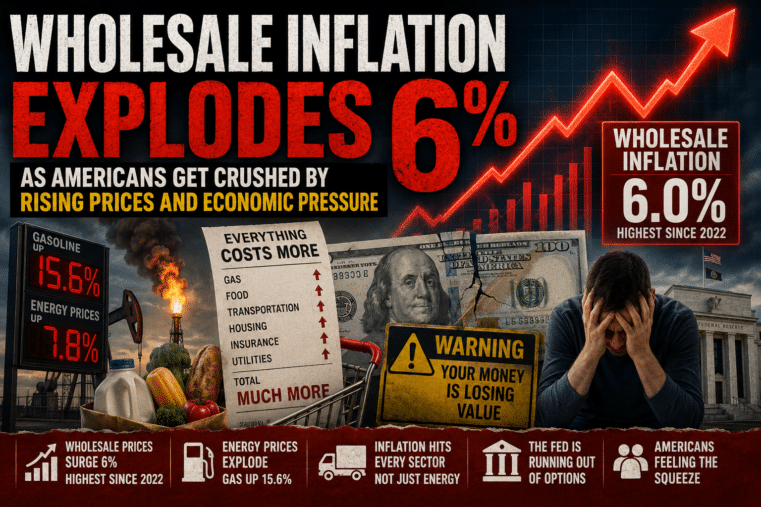
Yes, the headline CPI is under 3%. Yes, the Federal Reserve insists inflation is “under control.” But these are the same institutions that swore in 2021 that inflation was “transitory.” Meanwhile, housing costs have doubled in many markets since 2020, grocery bills keep climbing, and the national debt is sprinting toward $40 trillion.
In other words, inflation is more than the number they print in the press release. It’s in the lived experience of every family who’s watching their paycheck stretch less each month. If the $500 bill becomes reality, it will quietly acknowledge that the value of the dollar isn’t what it used to be.
The Political Theater—And Its Hidden Message
Rep. Paul Gosar’s proposal to put Donald Trump’s face on the $500 bill may be pitched as symbolic, but symbols matter. A currency redesign is never “just art”—it’s a political and psychological statement. Printing larger denominations subtly conditions the public to accept the idea that higher numbers are normal.
Once that seed is planted, the leap from “it’s just a bigger bill” to “I need it for everyday purchases” happens faster than most expect. By the time you’re using a $500 bill for basics, the dollar’s purchasing power will already be in freefall.
The Real Question: Are We Early in a Hyperinflation Cycle?
Hyperinflation doesn’t start with chaos—it starts with small, rationalized steps. Bigger bills for “convenience.” New designs for “modernization.” Quiet changes to normalize higher numbers.
If this sounds alarmist, ask yourself: when has a major currency increased its denominations in a time of genuine stability? The answer is never. Every historical case of hyperinflation began with measures that seemed logical at the time.
We are not yet at Weimar or Zimbabwe levels—but the pattern is familiar enough to warrant vigilance.
Your Move—Before the Dollar Shrinks Further
If you wait until CNN is telling you we’re in hyperinflation, it’s too late. Protecting your savings means acting before the headlines catch up. Hard assets—gold, silver, real property—are the historical refuge when paper currencies start their slow death.
The $500 bill might never make it into your wallet. But the thinking that brought it to the table? That’s already in motion. And that’s the warning you should hear loud and clear.
The financial landscape is shifting faster than most realize, and those who fail to prepare risk being left behind.
If you’re ready to take control of your financial destiny, I’ve got two resources that can help you start today:
📘 Download my free book, Seven Steps to Protect Your Bank Accounts, and learn actionable strategies to shield your wealth from the coming economic storm. Get your copy here.
📗 For those who prefer the feel of a hardcover, I’m offering Bill Brocius’ groundbreaking book, The End of Banking as You Know It, at a special price of $19.95 (currently $49.95 on Amazon). Order your copy here.
Remember—when they make the bills bigger, it’s usually because the money is getting smaller. The clock is ticking.