
The AI Bubble Is Cracking — And What Happens Next Could Supercharge Gold and Silver

The AI Gold Rush Was Never Just About Technology
Let me talk to you like I would over a cup of coffee.
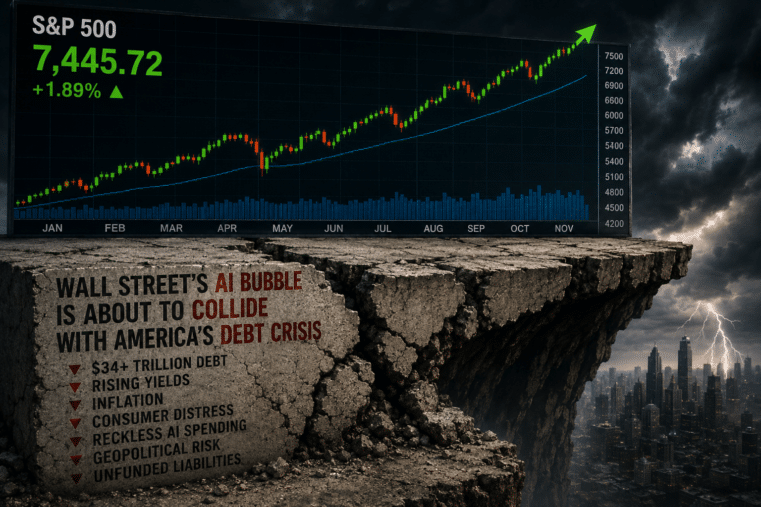
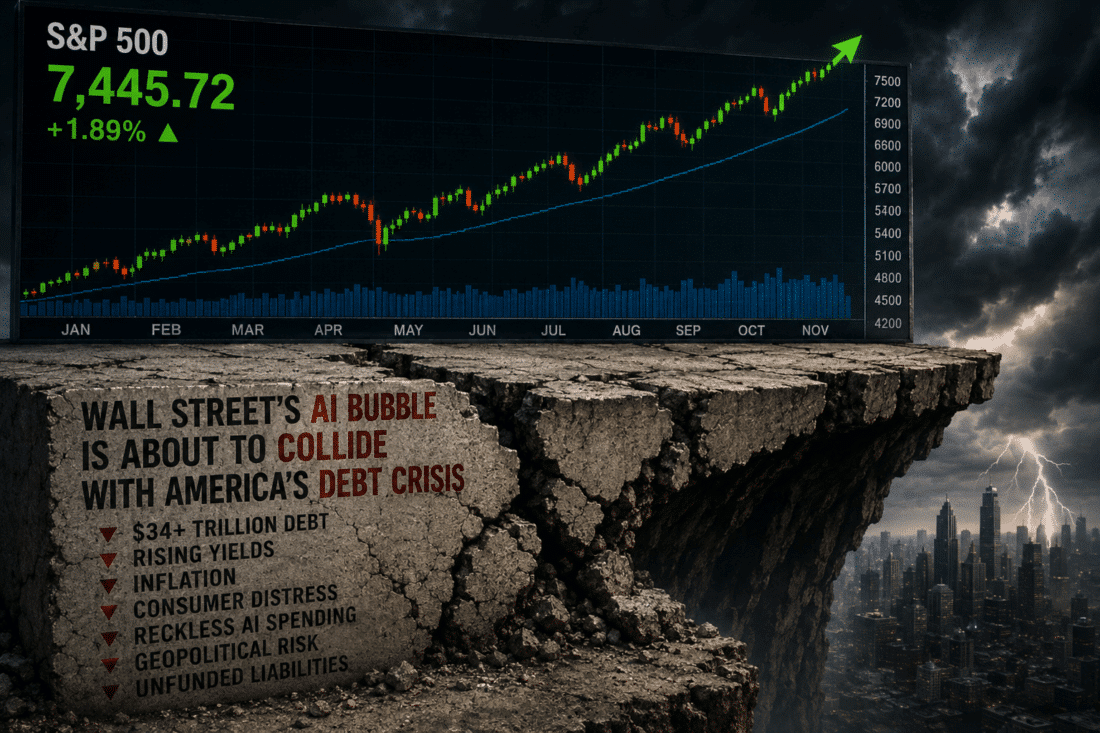
The AI boom wasn’t just about smarter software or faster chips. It was about liquidity. It was about trillions of dollars sloshing through a financial system that has been running on stimulus since 2008.
When interest rates stay artificially low for years and governments run massive deficits, that money has to go somewhere. In this cycle, it went into artificial intelligence.

Chipmakers soared. Cloud companies exploded higher. Any CEO who said “AI” on an earnings call saw their stock pop.
But markets eventually move from excitement to scrutiny.
Now investors are asking the uncomfortable questions:
- When will AI spending actually produce profits?
- How much debt is funding this infrastructure buildout?
- Are valuations detached from reality?
- What happens if expectations cool?
That shift—from hype to accountability—is where things get interesting for gold and silver investors.
What Happens If the AI Boom Slows?
Here’s the real question our readers should be asking:
What happens to the broader financial system if AI investment cools?
Because this isn’t just about a few overvalued tech stocks. AI infrastructure requires:
- Massive data centers
- Expensive semiconductor manufacturing
- Power grid expansion
- Corporate borrowing
- Government incentives
That’s a lot of capital tied up in one dominant narrative.
If earnings disappoint or spending slows, markets won’t just shrug it off. Retirement accounts are heavily concentrated in these same names. Passive index funds are overweight them. Pension funds rely on their performance.
And when concentrated leadership falters, volatility spreads.
Policymakers Don’t Let Air Out of Bubbles Quietly
Now let me tell you something I learned the hard way in finance.
Policymakers do not tolerate disorderly deflation in asset prices.
If markets wobble hard enough, central banks respond. They always do.
It might look like:
- Rate cuts
- Slower tightening
- Liquidity facilities
- Emergency measures
- Expanded balance sheets
Every road eventually leads back to easing.
And easing leads to one unavoidable outcome over time:
Currency dilution.
Fiat currency is like a car that loses value the second you drive it off the lot. It may run fine for years, but it’s constantly depreciating in purchasing power. When central banks step in to stabilize markets, that depreciation accelerates.
Gold doesn’t need hype.
It needs policy mistakes.
Gold: The Asset Outside the System
Wall Street treats gold like a portfolio hedge.
I don’t.
Gold is monetary insurance. It sits outside the banking system. It doesn’t require a counterparty. It doesn’t depend on quarterly earnings.
When confidence in financial engineering wavers, gold steps forward.
If AI volatility triggers:
- Equity stress
- Lower real interest rates
- A weaker dollar
- Renewed monetary easing
Gold becomes more attractive—not because tech stocks fell, but because policy response weakens currency integrity.
That’s the distinction mainstream analysis often misses.
Silver: Positioned for Either Outcome
Silver is more volatile. That’s just reality.
It wears two hats:
- Monetary metal
- Industrial metal
AI infrastructure consumes enormous amounts of electronics, power systems, and energy installations—all of which use silver.
So consider the two paths:
- If AI succeeds long term → industrial demand for silver rises.
- If AI disappoints → monetary easing rises, boosting silver’s monetary appeal.
Either way, silver has a tailwind over time.
The only variable is timing.
And in transitional periods, silver can swing harder than gold. That’s normal. It’s the price of owning an asset with dual demand drivers.
The Bigger Issue: A System Addicted to Narratives
Every era has its dominant story.
Railroads.
Dot-com.
Housing.
Now AI.
These stories absorb liquidity and justify high valuations. But underneath them sits a deeper issue:
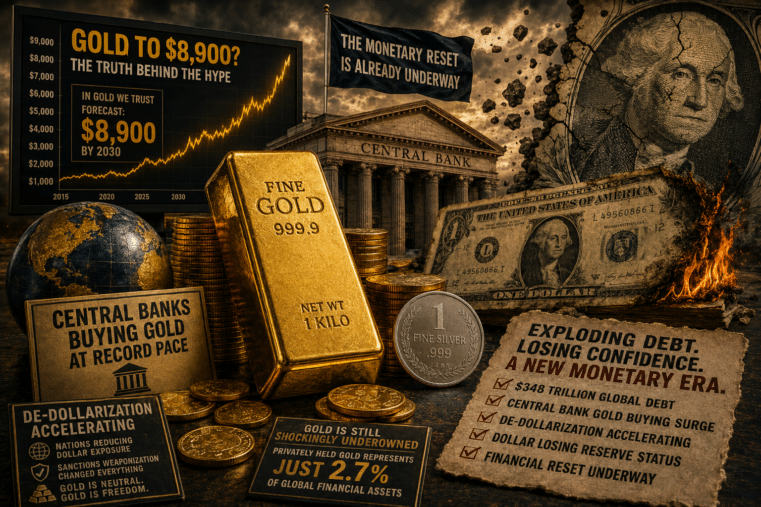
The global financial system requires constant expansion of debt to function.
When one growth narrative falters, another must take its place—or policymakers intervene.
That’s not conspiracy thinking. That’s structural reality.
Debt levels are historically high. Deficits are persistent. Entitlement obligations are rising. Governments cannot afford sustained deflation in asset prices.
Which means more intervention over time.
Which means continued pressure on fiat purchasing power.
AI Success Could Accelerate Digital Control
There’s another angle few are discussing.
The same AI infrastructure being built to optimize business can also optimize financial monitoring.
Artificial intelligence enhances:
- Real-time transaction analysis
- Predictive compliance systems
- Automated enforcement
- Digital currency management
As financial systems become more digitized, the line between innovation and oversight becomes thinner.
That’s another reason holding tangible assets outside digital systems matters.
Gold and silver offer something increasingly rare:
Privacy.
Autonomy.
Independence from centralized control.
What Smart Investors Should Watch
If you’re serious about protecting your wealth, focus less on AI headlines and more on:
- Real interest rates
- Federal Reserve policy shifts
- U.S. dollar strength
- Corporate debt levels
- Liquidity injections
Those are the levers that move precious metals.
AI is simply the latest trigger that could influence them.
Final Thoughts: Boom or Bust, the Monetary Trend Is Clear
Whether AI:
- Continues booming
- Cools gradually
- Or stumbles sharply
The likely long-term response from policymakers will involve accommodation.
And accommodation erodes currency purchasing power.
That’s why I don’t view gold and silver as tactical trades.
I view them as protection against a system that solves every problem with more liquidity.
I grew up working-class. I don’t forget what it feels like to watch prices rise while wages struggle to keep up. You don’t need a PhD in economics to see that something isn’t structurally sound.
You just need to look at your grocery bill.
AI may be revolutionary. It may transform industries. But it’s still operating inside a fragile monetary framework.
And that framework is what concerns me most.
Join the Inner Circle
If you’re tired of surface-level market commentary and want deeper analysis on:
- Gold and silver positioning
- Monetary policy shifts
- Systemic financial risks
- Wealth protection strategies
Then I invite you to join our Inner Circle.
Inside, we go beyond headlines. We break down what’s really happening beneath the surface and, more importantly, what you can do about it.
The financial system is evolving quickly. Liquidity cycles are accelerating. Narratives are shifting faster than ever.
Don’t navigate it alone.
Join the Inner Circle today and position yourself ahead of the next policy move—before the crowd catches on.