The Shipping Crisis Isn’t Cyclical — It’s Structural, and It’s a Canary in the Coal Mine

Freight Prices Are Exploding at the Wrong Time of Year
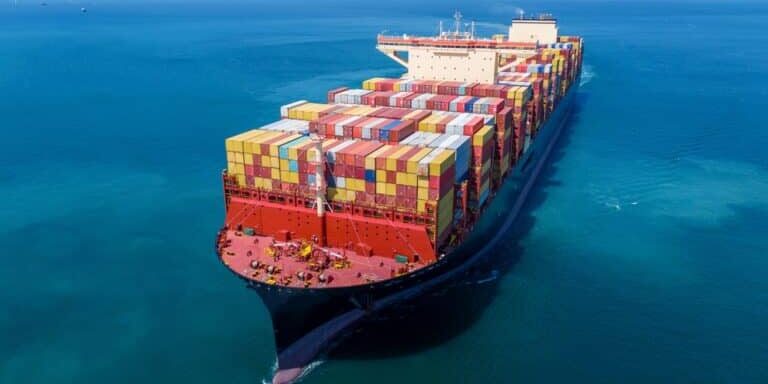
Shipping rates are supposed to cool off into the fourth quarter. Instead, they’re blowing past decade highs. Bloomberg reports that costs to move oil, LNG, and industrial materials are surging as we close out 2025 — with some tanker and gas carrier rates tripling on key global routes.
Let’s be clear: this is not about seasonal demand. This is about something much deeper. Freight doesn’t behave this way in a healthy, functioning system.
It behaves this way when the plumbing of global trade is breaking.

Global Trade Routes Are Being Torn Up and Rewritten
What we’re seeing now is the physical rewiring of the global economy:
- Sanctions have upended energy corridors.
- New tariffs and protectionist policies are pushing vessels off legacy routes.
- Geopolitical tensions are making chokepoints like the Red Sea, Panama Canal, and Strait of Hormuz slow, dangerous, or outright inaccessible.
That forces ships to travel farther, slower, and through more expensive waters. The result? A sharp increase in tonne-miles — the real driver of freight inflation. The longer the journey, the higher the cost — even if commodity demand stays flat.
The Baltic Dry Index Is Confirming the Breakdown
This isn’t just about tankers. The Baltic Dry Index, the bellwether for shipping raw materials like iron ore and coal, has surged sharply into late 2025. That tells you industrial consumers — factories, utilities, governments — are locking in physical supply under mounting transport stress.
When global shipping routes seize up, the entire supply chain gets hit. The cost isn’t just in the cargo. It’s in the movement itself.
Why This Isn't a Temporary Disruption — It's a Structural Shift
We are not watching a short-term congestion problem. We’re watching a long-term rewiring of how the world moves energy, materials, and critical goods. That means:
- Longer and more fragile trade routes
- Logistics dominated by national security concerns
- Transport inflation embedded into the global cost structure
This is the opposite of the low-friction, cost-minimized globalization era that kept prices artificially suppressed for decades.
The implications are permanent until proven otherwise.
From Freight to Inflation: The Cascade Has Begun
Here’s how this breaks down at the macro level:
- Transport inflation hits first — quietly, then suddenly
- It bleeds into commodity costs, regardless of production volume
- Central banks lose narrative control over “transitory” inflation
- Currency pressure builds, especially in overleveraged nations
- Monetary policy stress follows, forcing unnatural policy pivots
When the cost to move oil doubles, it doesn’t matter if crude prices are flat — you’re still paying more for energy. Same goes for coal, grain, metals, and fertilizers.
The shipping surge is the spark. The blaze is broader inflation, devaluation, and fiscal panic.
What About Gold and Silver? Why Hard Assets Matter Now
Gold Doesn’t Need a Shipping Lane — And That’s the Point
It’s easy to misunderstand gold’s role in this system. Let’s be precise: gold doesn’t rise because of shipping problems.
It rises when shipping disruptions signal a deeper collapse of global trust.
Gold is not an industrial input. It’s not priced off logistics capacity. It’s a monetary asset that sits outside the fragile infrastructure of global trade. When that infrastructure breaks — through sanctions, wars, or political interference — gold becomes more valuable by comparison.
It’s not just that it doesn’t need a port. It’s that gold is one of the only assets that doesn’t require permission to exist.
That’s what makes it dangerous — and essential.
Silver Walks a Finer Line
Silver is a hybrid. It behaves like a monetary metal during monetary stress — but it also has industrial exposure. That means in the short term, shipping constraints can be a headwind if they suppress industrial activity.
But here’s the catch: when transport inflation feeds into broader inflation, and confidence in fiat systems starts to erode, silver often runs with gold. Its upside is more volatile, but in an inflationary breakdown or currency crisis, it historically performs as a leveraged bet on monetary distrust.
Why You Need to Read the Signals — Not the Headlines
Most people wait for the Fed to admit there's a problem. But by the time Powell gives you permission to panic, the damage is already done.
Markets are forward-looking. And freight markets, in particular, are among the earliest warning systems for structural breakdown.
When the cost to move raw materials spikes without a demand shock, it means the system is absorbing friction — not momentum. That friction doesn’t disappear. It compounds. And eventually, it shows up in your bills, your currency, and your portfolio.
We’re Not Returning to Normal — This Is the New Normal
Here’s what we’re heading into:
- A world where trade is slower and more expensive
- Supply chains that are regionalized and duplicative
- Financial systems that are more fragile and less trusted
- Currency regimes that are at war with reality
None of that favors financial assets backed by confidence in the status quo.
It favors real things. Tangible assets. Scarce, trustless, durable stores of value.
Final Word: Shipping Is Just the Start
This freight surge is not noise. It’s the real economy screaming that the old architecture of trade — and by extension, fiat stability — is breaking down.
If the system that delivers your oil, grain, metals, and machinery is no longer reliable, what exactly do you think is backing the financial system? A spreadsheet at the Fed?
This is your moment of clarity. Use it.
Take Action Before the Next Disruption Hits
If you’re still sitting in fiat savings accounts or waiting for “markets to normalize,” you’re exactly where the system wants you — unprepared.
Start insulating yourself now:
- ✅ Download Bill Brocius’ free guide, 7 Steps to Protect Your Account from Bank Failure
- 📘 Get Bill’s book, End of Banking As You Know It — the definitive blueprint for exiting the system on your terms.
- 🔒 Subscribe to the Inner Circle Newsletter for just $19.95/month — and receive Bill’s real-time strategies, market calls, and survival tactics before the rest of the world catches on.
Because what’s coming isn’t a cycle. It’s a collapse of the old regime. And if you’re not moving now, you’ll be moved later.