What the BRICS “Gold Era” Really Means for the U.S. Dollar—And Why Time Is Running Out

BRICS Gold Accumulation: A Direct Threat to Dollar Dominance
The BRICS gold era impact is no longer a theoretical shift whispered among economists—it’s a seismic realignment unfolding in real time, with consequences that reach deep into the heart of the U.S. financial system. As BRICS nations accumulate unprecedented gold reserves, launch alternative settlement systems, and build the infrastructure for a post-dollar world, the foundations of American monetary dominance are eroding faster than most realize. What’s happening now isn’t temporary turbulence—it’s the early stages of a global reset that could permanently reshape how money, power, and trust function in the 21st century.
1. 6,000 Tonnes of Gold: The Beginning of the End for Dollar Hegemony
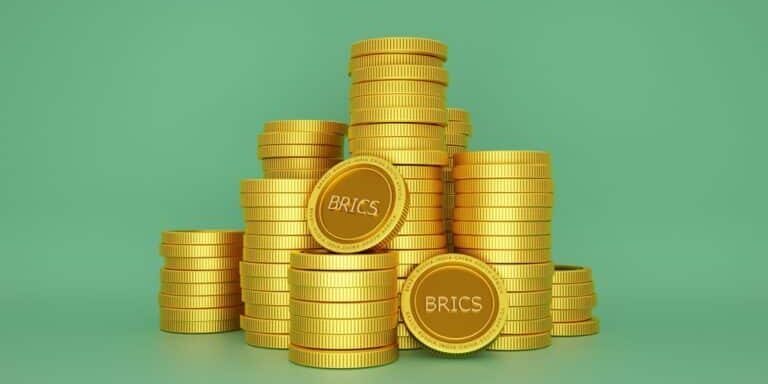
Harsana reports that BRICS countries now hold over 6,000 tonnes of gold—about 20% of all central bank reserves globally. For comparison, the U.S. Treasury officially holds 8,133 tonnes (though it hasn’t been fully audited since the Eisenhower administration). But here's the kicker:
Russia and China now control 74% of BRICS gold.
That concentration isn't accidental. It’s strategic. These nations understand something that most Americans don’t: Gold is monetary power. While Washington weaponizes the dollar through sanctions and debt monetization, the East is accumulating a currency-proof form of wealth—quietly dismantling the dollar’s role as the global reserve currency.
This is not about “replacing” the dollar overnight. As Russian Foreign Minister Sergey Lavrov noted, the goal is settlement in national currencies—but with gold acting as the underlying trust mechanism.
2. Central Banks Are Voting With Their Vaults
The World Gold Council data is a red flag few are heeding: Central banks have bought over 1,000 tonnes of gold per year since 2022. This isn’t a diversification strategy—it’s a rejection of the dollar.
- 73% of central bankers believe the dollar’s share in global reserves will shrink over the next five years.
- 43% are increasing gold holdings as a direct hedge against dollar exposure.
As Professor Adrian Saville put it: “It’s not that gold is worth more; it’s that the dollar is worth less.”
And yet, the U.S. government continues to debase its currency through trillion-dollar deficits, reckless interest payments, and an unsustainable national debt approaching $38 trillion.
3. JP Morgan Predicts Gold at $6,000 by 2028—That’s Not a Forecast, It’s a Warning
When a financial powerhouse like JP Morgan predicts $6,000 gold by 2028, you better pay attention. That’s a 500% increase from the pre-COVID average. Why?
Because the market smells blood in the water—and the victim is the petrodollar system that has propped up the American empire since 1974.
Gold is the “conviction long,” not because it’s shiny and rare, but because it’s a vote of no confidence in fiat currencies, especially the U.S. dollar. If these projections play out, it won’t just be a win for BRICS—it will be the final chapter in the dollar’s global dominance.
4. ISO 20022: The Global Settlement Superhighway Just Went Live
Amid all of this, a quiet but colossal shift occurred this weekend that will accelerate everything we just discussed: ISO 20022 went fully active. This isn’t just an upgrade to the financial plumbing—it’s the digital superhighway for the future of money.
ISO 20022 is the messaging standard that enables interoperability between central banks, commercial banks, and digital currencies—including future CBDCs (central bank digital currencies). Think of it as the SWIFT system’s replacement, but with more precision, more automation, and total traceability.
And here’s the twist: Even though former President Trump recently issued a federal ban on CBDCs in the U.S., that doesn’t stop the infrastructure from moving ahead globally. BRICS nations, especially China and Russia, are rapidly integrating their own CBDC frameworks into ISO 20022-compliant systems.
What does this mean?
- Settlement in national currencies (as Lavrov suggested) becomes faster, cheaper, and more secure.
- The U.S. dollar’s role in international transactions shrinks by default—not just by design.
- The U.S. risks being locked out of a new global system it no longer controls.
ISO 20022 is the on-ramp to a post-dollar financial world, and it just went live—whether Washington likes it or not.
5. BRICS Industrial Growth Isn’t Just Economic—It’s Geopolitical
Most Western analysts miss the second half of this equation: industrial capacity. The BRICS bloc isn’t just stacking bullion—they’re building infrastructure, launching digitalization programs, and developing manufacturing self-reliance.
- The BRICS Industrial Capacity Cooperation Center in China signals a pivot from raw material exporters to high-tech industrial powers.
- Green tech, digitization, and industrial training programs are aligning with national currency settlement systems.
In short: BRICS isn’t just forming an economic alliance—it’s laying the foundation for a parallel global order.
6. Implications: De-dollarization Is No Longer a Theory. It’s a Process in Motion.
If you still believe the U.S. dollar is “too big to fail,” you haven’t been watching what’s happening in real time.
✅ Gold is rising.
✅ Central banks are buying.
✅ BRICS nations are coordinating.
✅ ISO 20022 is live.
✅ The dollar’s share of global reserves is shrinking.
✅ U.S. fiscal policy is in shambles.
✅ Trust in Western institutions is evaporating.
This isn’t paranoia. It’s macroeconomic reality. And it’s why I say again and again: The end of banking as you know it has already begun.
What You Can Do Right Now
If you're still sitting on the sidelines hoping it all goes back to "normal," you are gambling with your savings, your retirement, and your sovereignty. Here's how to move from reactive to prepared:
✅ Download my free ebook, “7 Steps to Protect Your Account from Bank Failure.” It’s your blueprint for safeguarding your assets when trust in banks evaporates.
✅ Read my book, End of Banking As You Know It. Learn why the next crisis will be different—and how to stay one step ahead.
✅ Join the Inner Circle. For just $19.95/month, you’ll get exclusive access to in-depth strategies, live alerts, and intelligence the mainstream won’t touch.
The BRICS gold era isn’t some distant shift. It’s happening now. And with ISO 20022 live, the rails are in place for a financial system that no longer needs the dollar.
Every ounce of gold BRICS acquires, every ISO-compliant system they launch, and every industrial agreement they sign chips away at the world the dollar built.
You still have time. But not much.
—
Bill Brocius
DedollarizeNews.com | Truth. Urgency. Action.