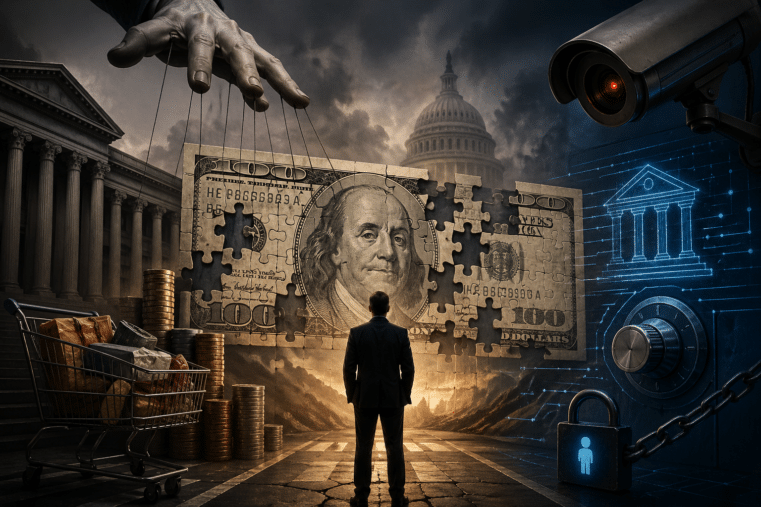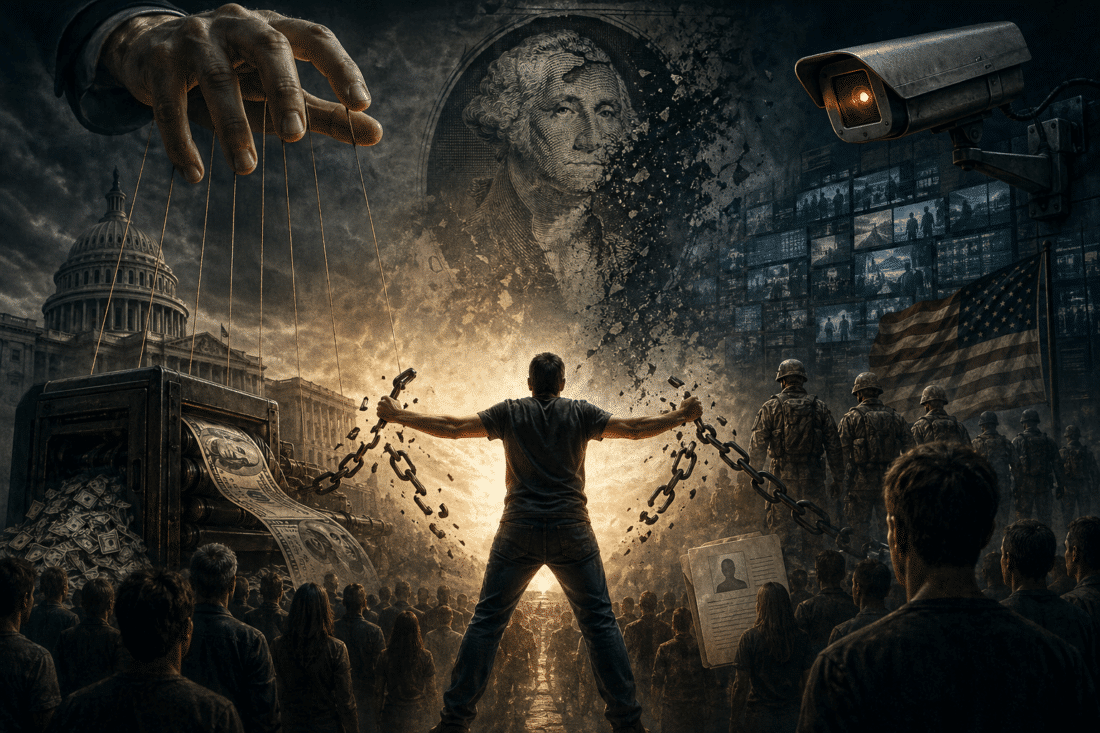

The Financial System Is Changing Without Your Consent

The Quiet Shift Nobody Voted For
No headlines. No national debate. No clear vote.
But the system is changing.
Money is moving from physical to digital. Payments are becoming intermediated by apps, platforms, and third parties. Banks are rewriting agreements. Governments are studying new monetary tools. Tech companies are stepping into finance.

Piece by piece, the ground is moving.
Not all at once. Not loudly. But steadily.
And most Americans? They’re busy. They’re working. They’re not reading 40-page deposit agreements or central bank white papers.
That’s the gap.
Convenience Is Winning—But At What Cost?
Let’s be honest: digital payments are easier.
Tap your phone. Send money instantly. No friction. No delay.
That’s real progress.
But convenience always comes with trade-offs.
When every transaction runs through a digital rail, it creates a record. When multiple institutions touch that transaction—banks, payment processors, data handlers—it creates exposure.
That doesn’t automatically mean control. But it does mean visibility.
And visibility changes the game.
The Fine Print Problem
Here’s where things get uncomfortable.
Most people don’t read their bank agreements. That’s not laziness—it’s reality. They’re long, dense, and written in legal language.
But buried in those agreements are important shifts:
- Arbitration clauses
- Limits on liability
- Language around third-party services
- Conditions tied to account access
None of this is new. But the scope is expanding as financial systems become more complex.
The takeaway isn’t panic.
It’s awareness.
Because if the rules change quietly, you only discover them when something goes wrong.
Digital Money: Innovation or Overreach?
There’s a growing conversation around digital currencies—both government-backed and privately issued.
Some argue they bring efficiency, transparency, and faster settlement.
Others raise concerns:
- Could digital systems reduce privacy?
- Could they centralize control?
- Could they introduce new forms of restriction?
Right now, these are open questions—not settled facts.
But history teaches something simple: technology reflects the incentives of the people who build and control it.
So the real question isn’t just what digital money can do.
It’s who decides how it’s used.
The Fear Factor vs. The Facts
Let’s separate signal from noise.
Some claims in this space go too far. Predictions of total financial lockdown, instant collapse, or coordinated global control often rely on speculation more than evidence.
But dismissing everything would be just as reckless.
There are real trends:
- Increasing digitization of money
- Greater data collection in financial systems
- Expanding partnerships between finance and tech
- Rising global debt pressures
These are not theories. They’re observable.
The mistake is going to extremes—either blind trust or total paranoia.
The smart move lives in the middle.
What Actually Matters Right Now
You don’t need to believe every worst-case scenario to recognize a simple truth:
The financial system is evolving. And when systems evolve, risk changes.
That means asking better questions:
- Where is your money held?
- How diversified are your assets?
- What happens if access—not ownership—becomes the issue?
- Do you understand the tools you rely on daily?
This isn’t about rejecting the system.
It’s about not being dependent on a single version of it.
My Take: Stay Grounded, Stay Sharp
Here’s the reality.
Not every warning in that book will come true. Some are overstated. Some are speculative. Some are framed to provoke.
But the core idea—that systems can change faster than people adapt—is absolutely real.
And history backs that up.
The people who navigate change best aren’t the loudest or the most fearful.
They’re the most prepared.
They pay attention. They stay flexible. They don’t outsource all their thinking to institutions—or to internet personalities.
They stay grounded.
The Bottom Line
The system may be changing without your consent.
But you’re not powerless.
You still have choices. You still have time. You still have agency.
The worst move right now?
Ignoring it.
The second worst?
Overreacting to it.
The right move?
Understand it. Question it. Prepare intelligently.
Want the Full Breakdown?
If you’re serious about staying ahead of these shifts—and not getting blindsided—get the deeper analysis most people never see.
Join The Inner Circle for direct insights, breakdowns, and strategies built for people who don’t want to be the last to know.