
The Great Economic Lie: Why There Are No Constants in Human Action—and Why That Matters Now More Than Ever

The Illusion of Certainty in an Uncertain World
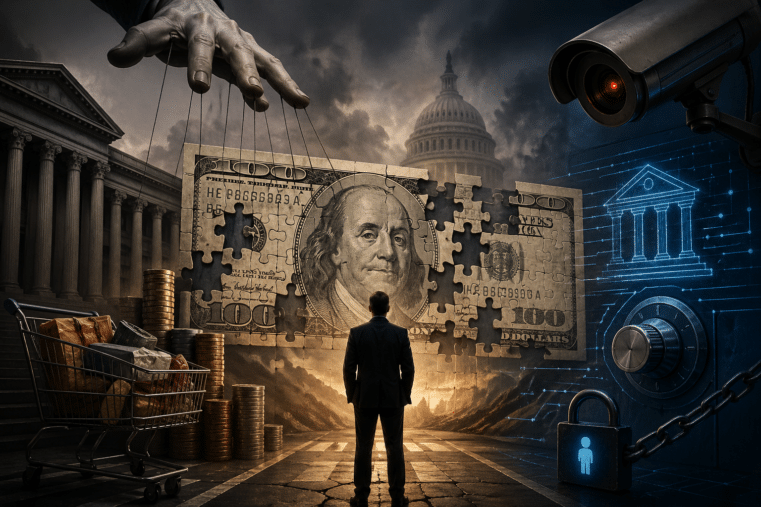
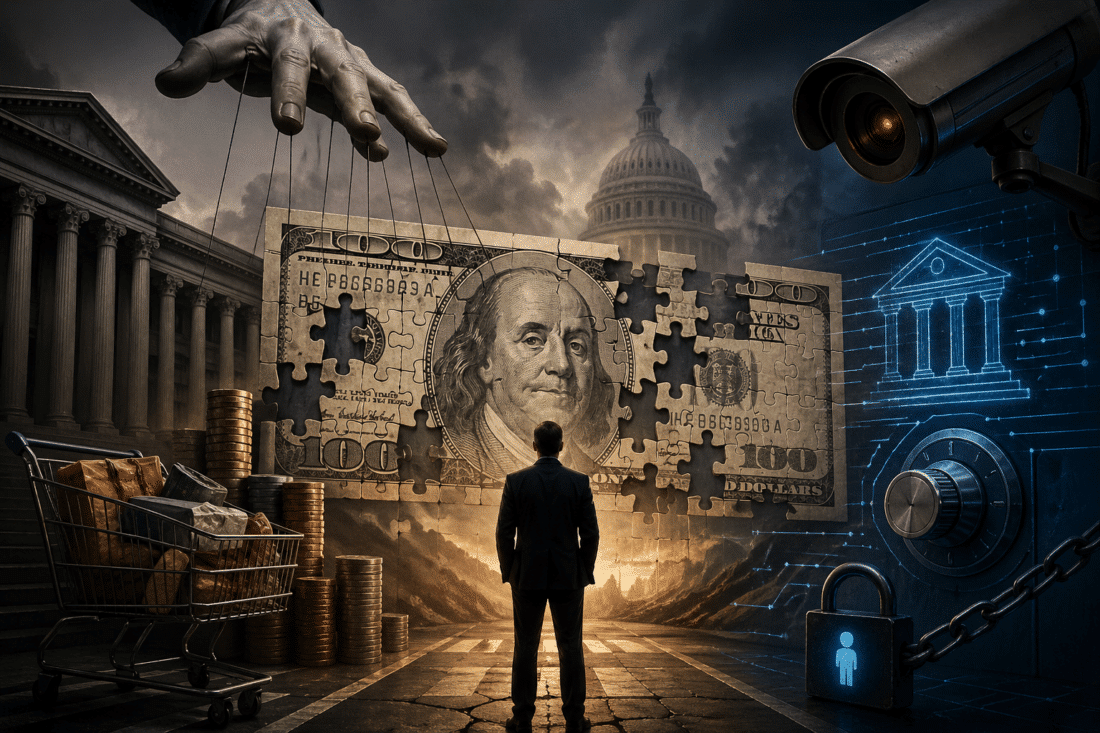
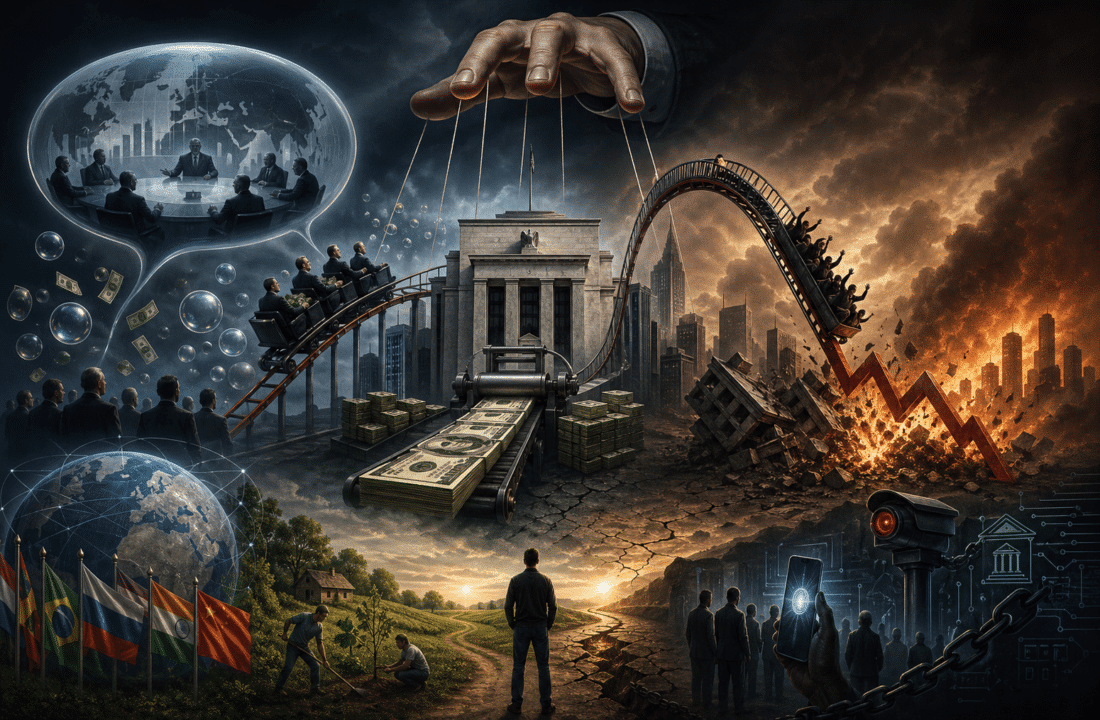
Every time the Federal Reserve raises rates, expands its balance sheet, or tinkers with its inflation targets, it does so based on an unspoken premise: that the economy is a machine. A set of levers. A model. A formula. This is the illusion Shostak dismantles—and it's one that must be understood now, as central banks race to launch Central Bank Digital Currencies (CBDCs), backed by predictive models that pretend to understand you. This same mindset is what makes Programmable CBDC Spending Limits possible, turning human choice into something policymakers believe they can engineer, restrict, and control.
They don’t. And they never will.
Economics Is Not Physics—It's About People
The central thesis of Shostak’s article is rooted in praxeology, the Austrian school concept championed by Ludwig von Mises: economics is the study of human action, not mechanical systems. Unlike atoms or electrons, people make choices. They reevaluate. They adapt. They change their minds.

That means:
- There are no constants in economics.
- You cannot predict future economic behavior with equations based on past data.
- Any system that pretends to do so—like modern central banking—is fundamentally broken.
The Fatal Flaw of Modern Economic Models
Economists today rely on regression analysis and statistical techniques to forecast how one variable (like consumption) responds to another (like production). Shostak gives a typical example:
Consumption = 10 + 0.5 × Production
The problem? This formula only works if the data is stationary—i.e., if it fluctuates around a stable mean. Most real-world economic data is non-stationary. It's chaotic, directionless, and driven by unpredictable human behavior.
Enter Clive Granger’s concept of co-integration—a statistical workaround to make two drifting variables appear to move together through a shared trend. But even this is a mathematical patch over a deeper problem: the assumption that people behave the same way tomorrow as they did yesterday.
Why This Matters Now—Not Tomorrow
You might be thinking: "So what? Isn't this academic?" No. This is deadly relevant, because the entire CBDC regime, digital identity systems, and programmable money infrastructure being rolled out today is built on this lie.
The Fed, the Treasury, the IMF—they all believe that if they have enough data and control, they can:
- Predict spending behavior
- Prevent economic downturns
- Enforce “fairness” through algorithmic policy
- Program money to expire, direct it to certain vendors, or penalize “unapproved” behavior
And the only thing stopping them? Your understanding of how flawed their logic is.
Mathematics Can’t Measure Freedom or Intent
Let’s be blunt: the very idea that you can map out the economy using equations assumes people are programmable. It dehumanizes the market. It assumes your decisions don’t stem from values, goals, dreams, fears—but from static preferences in a spreadsheet.
In truth, your economic decisions are deeply personal and always changing:
- You may spend more this month because your child is getting married.
- You may refuse a raise because you want more time with your family.
- You may liquidate your savings because you no longer trust the banking system.
None of these are rational in a formulaic sense. But they’re deeply human. And they break the model.
The Tyranny Behind the Model
Once you accept that people are unpredictable, you must also accept that any policy based on controlling their behavior is destined to fail—or turn authoritarian.
This is the cornerstone of why CBDCs are so dangerous.
If a central bank can't predict your economic choices, the next logical step is to constrain them:
- Your digital dollars might expire to force consumption.
- You may be blocked from spending at “non-approved” businesses.
- Loan terms might change automatically based on your social or carbon score.
All of it justified by a model that pretends to know you.
Mises Had It Right: Causality Comes From Within
Ludwig von Mises warned decades ago:
"There are, in the field of economics, no constant relations, and consequently no measurement is possible."
This wasn’t cynicism. It was clarity. It was a warning. And it’s exactly why today's economic system—run by central planners and data scientists—has become an elaborate delusion.
You can’t model freedom.
You can’t program choice.
You can’t calculate the soul.
And the more the state tries, the more they must surveil, restrict, and control in order to keep the illusion alive.
Your Next Step: Protect Yourself from the Digital Trap
This isn’t about academic debates. This is about your future in a financial system that no longer respects privacy, liberty, or even human unpredictability. If you don’t take control now, they’ll take control for you—with every “smart” dollar and FedNow transaction.
Download Bill Brocius’ Digital Dollar Reset Guide today. It’s the blueprint for escaping the programmable future and reclaiming your economic sovereignty. Gold, silver, Bitcoin, off-grid finance—you need this information now.
Grab it before the Fed finishes modeling you out of the equation.