This Is Not a Free Market: When Government Threatens Businesses for Refusing Federal Agents

The Incident: A Gas Station, Federal Agents, and a Viral Video
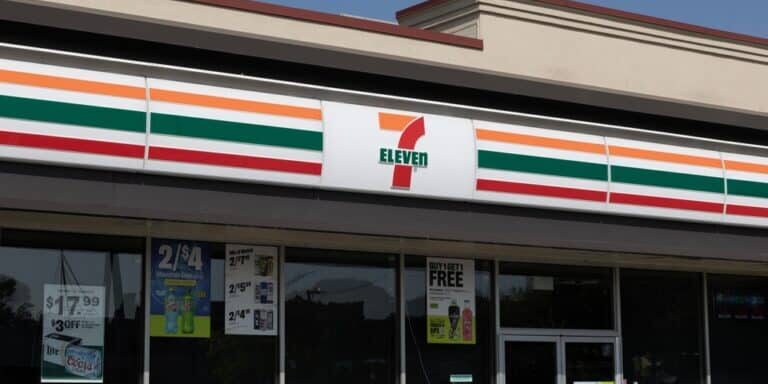
A Speedway gas station in Minneapolis, owned by 7-Eleven, denied service to U.S. Border Patrol Commander Gregory Bovino and accompanying federal agents. A manager reportedly told them, “I don’t support ICE, and nobody here does.”
That’s it. A private employee, at a private business, made a decision about who to serve.
The response? The General Services Administration (GSA) sent a formal letter to 7-Eleven’s COO demanding answers and hinting that the company’s participation in the federal Fleet Card program—used for fueling government vehicles—could be in jeopardy.
Let’s call this what it is.
This wasn’t about fuel access. It was about control.
Property Rights 101: Ownership Means the Right to Refuse
In a genuinely free economy, ownership is not symbolic. It’s absolute within the bounds of non-aggression. If you own a business, you control who enters, who you transact with, and under what terms.
That’s not radical. That’s the foundation of voluntary exchange.
If a café refuses service to IRS agents, that’s their call.
If a gas station refuses ICE officers, that’s their call.
If a restaurant refuses anti-ICE activists, that’s also their call.
The principle doesn’t change based on who you sympathize with.
The moment the state can compel service, your “property” becomes conditional. You don’t own it. You manage it under government supervision.
And that’s not a free market.
The GSA’s Move: Economic Leverage as Political Punishment
The GSA’s letter makes it clear: if 7-Eleven doesn’t fall in line, its access to federal Fleet Card payments could be revoked.
This is where the mask slips.
The government isn’t just a customer. It’s a regulator, a lawmaker, and an enforcement body. When it uses purchasing power to discipline dissent, it stops being a market participant and becomes an economic enforcer.
This is not capitalism.
It’s a system where the state says:
“You’re free to run your business—so long as you don’t cross us.”
That’s soft coercion. And it’s incredibly effective.
When the State Is Both Customer and Judge
Under a true market order, if a customer doesn’t like how they’re treated, they go elsewhere. Competitors step in. Market forces adjust.
But when the customer is the federal government, it doesn’t just walk away.
It investigates.
It threatens contracts.
It sends formal letters on official letterhead.
And because so many corporations depend on federal partnerships, the leverage works. The deeper businesses entangle themselves with state programs, the more fragile their independence becomes.
Dependency breeds obedience.
“Operational Readiness” or Narrative Enforcement?
The official argument is that denying service to federal agents disrupts operational readiness. Government vehicles need fuel. Agents need lodging. Federal operations must continue smoothly.
But let’s ask the obvious question:
Are there really no other fuel stations in Minneapolis?
No other hotels? No other restaurants?
The federal Fleet Card is accepted at 95% of stations nationwide. The idea that one location’s refusal constitutes a national readiness crisis is theater.
This isn’t about logistics.
It’s about sending a message:
Businesses that challenge federal authority will feel pressure.
The Illusion of a Free Economy
We’re constantly told we live in a free-market system. That businesses are private actors making independent decisions.
But look closely.
When franchisees step out of line, corporate headquarters intervenes.
When corporations hesitate, federal agencies “request clarification.”
When dissent persists, contracts and approvals suddenly come into question.
This is not laissez-faire capitalism.
It’s a managed economy where the state sets invisible boundaries and punishes those who step outside them.
A free market doesn’t require ideological alignment with the federal government.
A controlled economy does.
You Don’t Have to Like ICE to Defend Property Rights
This is where people get twisted up.
Some will cheer the denial because they oppose ICE.
Others will cheer the crackdown because they support ICE.
Both reactions miss the deeper issue.
The question isn’t whether you agree with immigration enforcement. The question is whether the state has the authority to pressure private businesses into compliance based on political considerations.
If you defend government coercion when it benefits your side, don’t be surprised when it’s used against you later.
Principles only matter when they apply universally.
Corporate-State Entanglement: The Real Problem
Here’s the uncomfortable truth: corporations invited this vulnerability.
When you accept government fleet cards, subsidies, contracts, and regulatory favors, you weave yourself into the machinery of the state. You gain predictable revenue—but you lose leverage.
This is how the modern American economy actually functions:
Not as a free exchange of goods and services, but as a dense web of public-private dependency.
And once you’re inside that web, autonomy is conditional.
If Businesses Can’t Refuse the State, It’s No Longer a Free Market
The defining test of a free economy isn’t whether businesses can serve customers.
It’s whether they can refuse them.
If a business cannot say “no” to the government without fear of retaliation, then ownership is nominal and freedom is cosmetic.
We’re watching the boundaries shift in real time. Not through dramatic confiscations or nationalizations—but through letters, compliance demands, and subtle threats.
That’s how free markets erode. Not with a bang, but with administrative paperwork.
Final Thought: Pick a Side—Markets or Managed Compliance
You can support immigration enforcement and still defend property rights.
You can oppose immigration enforcement and still oppose state retaliation.
The consistent position is simple:
Voluntary exchange must remain voluntary.
Property rights must remain intact.
Government must not weaponize economic relationships to enforce ideological conformity.
If that line disappears, the phrase “free economy” becomes nothing more than branding.
And once that illusion collapses, we’ll be forced to admit what we’ve been living under all along.
This isn’t a free market.
It’s a supervised one.
CALL TO ACTION: Learn How to Exit the System Before It’s Too Late
If the government can threaten your fuel contract today, what happens when they control your digital wallet tomorrow?
FedNow and central bank digital currencies (CBDCs) are the next phase of financial control. Once programmable money becomes the standard, refusing service to federal agents won’t even be an option—your transactions will be pre-filtered by policy.
Don’t wait for the door to slam shut.
Download the Digital Dollar Reset Guide by Bill Brocius — your survival depends on understanding what’s coming next.
This guide isn’t optional. It’s required intelligence for anyone who still believes in property, privacy, and economic self-defense.
Because if you wait until they flip the switch…
You won’t get to say “no.”
You won’t even get to ask.