Washington Can Escalate—But It Can’t Escape: 7 Danger Zones Facing America in a Strait of Hormuz Showdown

The Illusion of Control
Let me ask you something:
What happens when the most powerful military on earth steps into a conflict… but the system it’s defending is already unstable?
That’s the real story here.

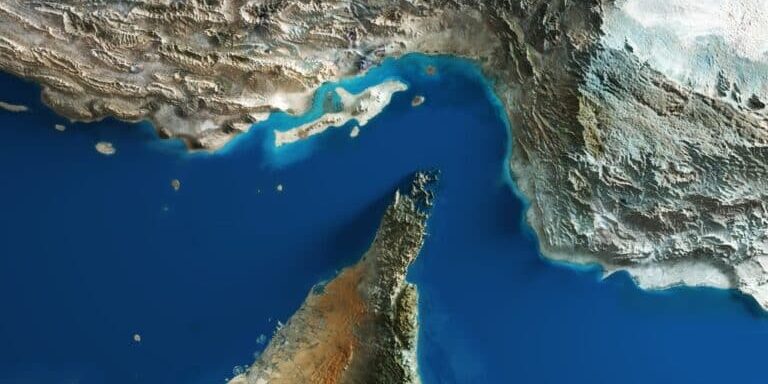
After failed negotiations with Iran, the United States is leaning into a maritime pressure strategy in one of the most volatile chokepoints on the planet—the Strait of Hormuz.
On paper, it looks like strength.
In reality?
It’s exposure.
Because while the U.S. can escalate militarily, it cannot insulate itself from the economic consequences that follow.
Energy Shock Without Direct Dependence
Most Americans have been told a comforting story: “We’re energy independent.”
That narrative falls apart the moment you understand how oil actually works.
Oil is globally priced. Not locally protected.
And roughly 20% of the world’s oil supply flows through the Strait of Hormuz.
So even if the U.S. imports less from the region, it doesn’t matter.
If Hormuz tightens, prices surge—everywhere.
Translation: You don’t need a shortage to feel pain. You just need higher prices.
Risk: $100–$150+ oil becomes the new baseline → gasoline spikes → household budgets crack → political pressure explodes.
The Inflation Trap Is Back—and Worse
Now we move into dangerous territory.
Because this isn’t just about energy—it’s about inflation.
Oil feeds into everything:
- Transportation
- Food production
- Manufacturing
So when energy prices rise, inflation doesn’t just tick up—it spreads.
And here’s the trap:
Just as inflation appears to cool… it comes roaring back.
The Federal Reserve is cornered:
- Cut rates → inflation reignites
- Hold rates high → economic growth stalls
There is no clean move.
Risk: Policy paralysis, volatile markets, and a prolonged economic squeeze that hits both Wall Street and Main Street.
The Hidden Tax Most Americans Won’t See Coming
Here’s something they won’t say out loud:
This functions like a tax.
A silent one.
When energy prices rise:
- Gas becomes more expensive overnight
- Food prices follow
- Everyday goods creep higher
But unlike a tax?
There’s no legislation. No vote. No relief mechanism.
You just pay more.
And over time, that pressure compounds.
Risk: Consumer sentiment collapses → spending slows → the economic engine begins to stall.
Escalation Is Easy—Exit Is Not
A blockade isn’t a headline—it’s an ongoing operation.
And operations create friction.
Every intercepted vessel…
Every warning issued…
Every miscalculation…
…increases the chance of escalation.
Iran has made its position clear: approach aggressively, and you’re treated as hostile.
And unlike traditional warfare, Iran specializes in asymmetry:
- Naval mines
- Drone swarms
- Fast attack boats
This isn’t about a clean, controlled engagement.
It’s about chaos.
Risk: One misstep → rapid escalation → the U.S. gets pulled into a broader regional conflict it cannot easily exit.
The Asymmetry Problem No One Wants to Admit
Let’s strip this down to fundamentals.
The U.S. operates with:
- Expensive assets
- High visibility
- Global accountability
Iran operates with:
- Low-cost disruption tactics
- Geographic advantage
- A willingness to endure economic pain
That’s not a fair fight.
That’s an imbalance.
Because the U.S. must maintain order.
Iran only needs to create instability.
And instability is far cheaper.
Risk: The U.S. spends billions to stabilize a system that can be disrupted for millions.
The Blowback Won’t Stay Overseas
Here’s another illusion:
That this conflict stays “over there.”
It doesn’t.
Europe and Asia rely heavily on Gulf energy. Disruptions ripple outward:
- Shipping lanes tighten
- Supply chains slow
- Markets react instantly
And because the U.S. sits at the center of the global financial system…
It absorbs the shockwaves.
Risk:
- Strained alliances
- Trade disruptions
- Volatility across equities, bonds, and currencies
This is how a regional conflict becomes a global economic event.
The Real Battlefield: Domestic Politics
Now we get to the most immediate danger.
Not missiles.
Not ships.
Voters.
Because nothing hits faster than rising gas prices.
Nothing spreads faster than inflation headlines.
And nothing destabilizes faster than economic anxiety during a political cycle.
Even figures like Donald Trump have acknowledged the likelihood of sustained high energy prices.
And timing matters.
If this pressure builds into an election cycle?
It becomes combustible.
Risk: Policy decisions driven by short-term political survival—not long-term strategy.
This Isn’t Just Geopolitics—It’s System Exposure
Let me show you what’s really happening.
This isn’t just a conflict with Iran.
It’s a stress test of a system already stretched thin:
- A global economy dependent on fragile supply lines
- A financial system addicted to low rates and liquidity
- A population already strained by inflation
And now?
You’re layering geopolitical risk on top of it.
This is how systems break—not from one shock, but from overlapping pressures.
My Response: The Pattern Is the Warning
Most people will watch this as a geopolitical story.
They’ll focus on headlines, troop movements, and diplomatic statements.
But that’s not where the real signal is.
The signal is in the pattern:
- Centralized systems
- Fragile dependencies
- Limited margin for error
And here’s where it connects to something bigger.
The same institutions struggling to manage inflation, energy shocks, and global instability…
…are simultaneously rolling out systems of tighter financial control:
- Real-time payment rails
- Central bank digital currencies
- Programmable money frameworks
Ask yourself:
What happens when economic instability meets financial control infrastructure?
That’s not a coincidence.
That’s convergence.
Final Warning: Pressure Creates Opportunity—But Not for Everyone
The United States can escalate.
That much is clear.
But it cannot control the chain reaction that follows.
And when those reactions hit:
- Prices move fast
- Policy lags behind
- The average person absorbs the shock
This is how power shifts.
Quietly at first.
Then all at once.
Take Action Before the System Tightens
If you can see what’s happening—rising instability, centralized control, and a system under pressure—then you’re already ahead of most.
But awareness without action is a dead end.
You need to understand where this is going and how to position yourself before the next phase unfolds.
That’s why I strongly recommend you Download the Digital Dollar Reset Guide by Bill Brocius. It lays out, step by step, how the financial system is evolving—and what you can do now to protect your autonomy before control mechanisms fully lock in.
Because when economic pressure and financial control converge…
You won’t want to be reacting in real time.