Billionaires Are Crowding Into Gold — And That’s Not a Minor Signal

The mainstream loves to whisper about “safe-haven” assets. But when its richest players start buying gold like a lifeboat, you don’t whisper — you listen.
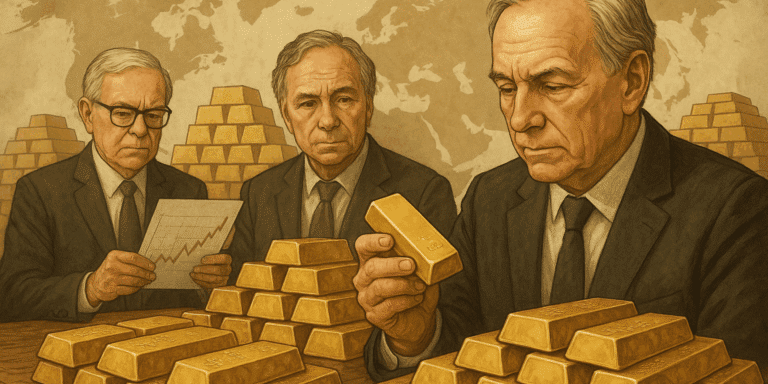
More billionaires are going all‑in on bullion. The kind of capital they represent isn’t about short-term momentum plays. This is a foundational realignment in how power stores wealth.
When the Giants Shift, You Should Watch


Ray Dalio recently floated the idea of allocating 15% of your portfolio to gold — a figure that would have once been considered radical among institutional allocators.
Better yet: Bridgewater disclosed a $319 million fresh gold accumulation in Q1 via GLD, signaling he’s not just talking — he’s acting.
Then there’s Paul Tudor Jones, calling gold a core alongside crypto and Nasdaq — a diversification hedge when conventional assets crack.
And John Paulson — legendary for his housing‑bubble short — just snapped up a massive stake in the Donlin Gold mining project in Alaska. He’s not buying paper gold; he’s buying ground.
Make no mistake: this is not speculation. It is conviction on layers — paper, physical, and upstream in mining. The billionaires are reaching for control, not just exposure.
Why the Pivot to Gold Now?
- Distrust in fiat & central banks
These elites see what most people choose to ignore: in an era of exploding debt, perpetual deficits, and runaway monetary supply, currencies are becoming brittle. Gold is the insurance the Fed can’t print. - Systemic tail risks
Cracks are forming in credit markets, private debt, and leverage structures. Billionaires aren’t just hedging against volatility — they’re hedging collapse. - Network effects & reflexivity
The more money moving into gold, the more momentum it gains. Goldman Sachs now sees gold heading to $4,900 by end‑2026, citing inflows and central bank demand. - Real assets over paper assets
Buying a mine — like Paulson did — is the ultimate move in owning the real, non‑paper anchor beneath markets. - A signal to lesser players
If the big fish are betting gold, it drags in the mid‑level capital, then retail. The narrative shifts — and money follows.
But It’s Not a Guarantee — and That’s the Point
Yes, gold has critics. Some warn that the rally is becoming overbought and vulnerable to short-term pullbacks. Some say gold is overcrowded; that enthusiasm risks exhaustion.
But here’s the crux: the billionaires are not chasing short squeezes. They’re preparing for regimes. They’re trying to reorient their balance sheets for a new monetary order. The pullbacks are noise. The direction matters.
We’re not just in a gold rally — we’re witnessing a herald of capital’s response to a fracturing financial order.
What You Should Do (If You’re Not an Oligarch)
- Don’t treat gold as a trivia asset. Position it as insurance, not a bet.
- Tilt allocations gradually, not all at once — volatility is real.
- Look upstream: mining equities, royalities, physical gold custody.
- Watch central bank policy, inflation, credit defaults — those are your triggers.
Bottom line: The world’s richest are not whispering; they’re shouting. Bettors of power are stacking gold — not because it’s trendy, but because they believe fiat’s dominance is ending. Investors who fail to hear that shift risk being the last ones scrambling when the regime changes.
Take action now. Download Seven Steps to Protect Yourself from Bank Failure by Bill Brocius — arm yourself with structure before the collapse organizes itself.