Digital Dollar Shock: FedNow, CBDC Control, and the Oil Crisis Triggering Global Financial Surveillance Collapse

The Strait of Hormuz Crisis Is More Than an Energy Problem
Let’s strip away the sanitized headlines.
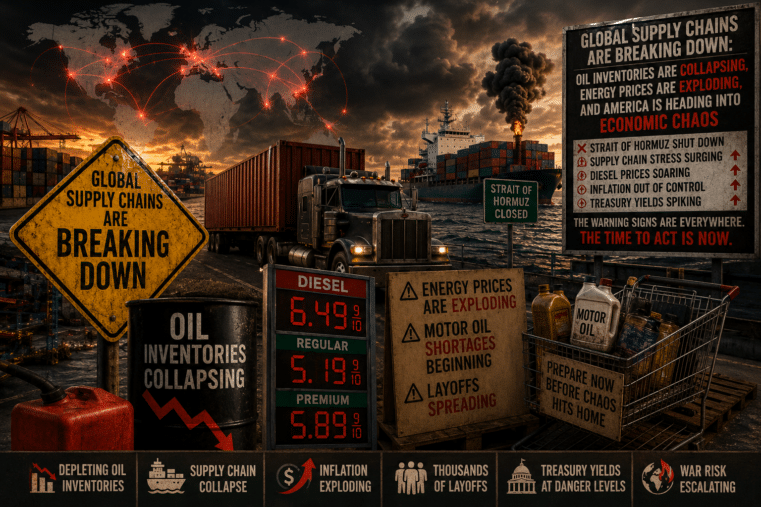
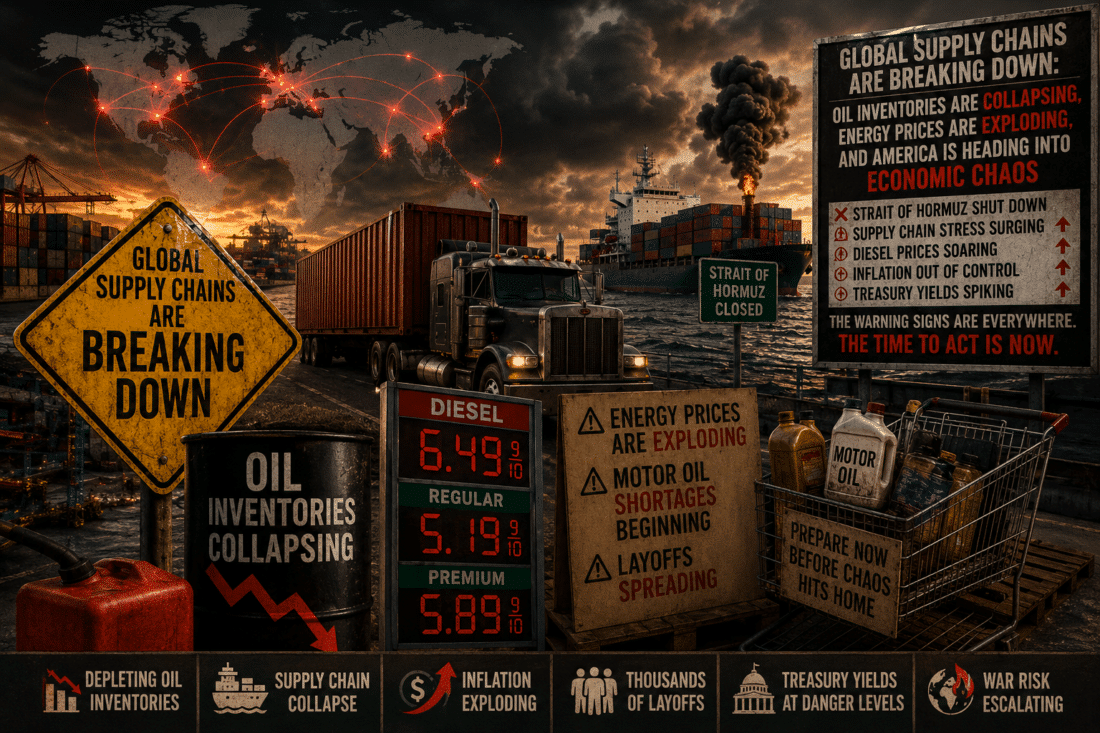
The closure of the Strait of Hormuz isn’t just disrupting oil—it’s detonating a chain reaction across the global economy. Roughly a fifth of the world’s oil supply moves through that narrow corridor. Now it’s effectively locked down, and production in the Persian Gulf has already dropped by over 50%.
That’s not a fluctuation. That’s a systemic shock.

The International Energy Agency is calling this the “greatest energy security crisis in history.” Bigger than the 1970s oil embargo. Bigger than anything tied to Ukraine.
And here’s what they’re not saying out loud:
Energy instability is the fastest way to justify centralized economic control.
When fuel spikes, everything spikes—transport, food, manufacturing. That creates panic. And panic creates compliance.
Fertilizer Collapse = Food Crisis = Control Leverage
While everyone’s watching gas prices tick upward, the real catastrophe is quietly unfolding in the agricultural sector.
Over half of the Middle East’s urea production—critical for nitrogen fertilizer—is offline. Supply chains are choking. Prices are surging.
And fertilizer isn’t optional.
No fertilizer = dramatically reduced crop yields.
That’s exactly why this matters:
- U.S. wheat conditions are already deteriorating due to drought
- Farmers are planting the fewest wheat acres since 1919
- Input costs (fuel, fertilizer, equipment) are crushing margins
This is how food shortages begin—not overnight, but through layered constraints.
First comes reduced supply.
Then price spikes.
Then rationing narratives.
And eventually? Digital tracking of who gets what.
Drought, Crop Failures, and the “Perfect Storm” Setup
The environmental angle makes this even worse.
We’re looking at drought conditions in key U.S. agricultural regions that are being compared to the Dust Bowl era. Snowpack levels in critical water systems are collapsing. Reservoir inputs are drying up.
This isn’t just bad weather—it’s systemic fragility.
When you combine:
- Energy shortages
- Fertilizer disruptions
- Water scarcity
- Reduced planting
You don’t get a temporary spike in grocery prices.
You get long-term food insecurity.
And historically, food insecurity is one of the fastest ways governments expand control over populations.
FedNow and the Infrastructure Behind the Digital Dollar Shock
Now here’s where things get interesting—and dangerous.
While all of this chaos unfolds, the U.S. has already rolled out FedNow, a real-time payment system operated by the Federal Reserve.
On the surface, it’s about faster payments.
Under the hood? It’s the foundation for programmable money.
That means:
- Transactions can be monitored in real time
- Spending can be tracked, flagged, or restricted
- Funds can be issued with conditions attached
Pair that with a full-scale crisis—fuel shortages, food scarcity, economic instability—and suddenly the argument for a central bank digital currency (CBDC) becomes “common sense.”
They’ll sell it as stability.
They’ll market it as efficiency.
But make no mistake—it’s about control.
CBDC Risks: Financial Surveillance and Loss of Autonomy
A CBDC isn’t just digital cash.
It’s programmable, trackable, and controllable at the policy level.
That opens the door to:
- Government financial surveillance at scale
- Spending restrictions based on behavior or policy compliance
- Expiration dates on money
- Automated taxation or penalties
In a crisis environment, these tools don’t get debated—they get deployed.
Think about it:
If fuel is scarce, what stops authorities from limiting how much you can purchase?
If food supplies tighten, what prevents “equitable distribution” through controlled digital wallets?
This isn’t theory. These are built-in capabilities of programmable currency systems.
The Cashless Society Trap Is Closing Fast
Cash has one major flaw—from a government perspective.
It’s private.
That’s why every major crisis over the past decade has quietly nudged society toward digital-only transactions.
Now, with FedNow operational and CBDC discussions accelerating globally, the infrastructure is nearly complete.
What’s missing?
A trigger event big enough to justify full adoption.
You’re watching that trigger unfold right now:
- Global oil shock
- Food supply disruption
- Economic instability
This is how a cashless society gets normalized—not through convenience, but through crisis.
My Take: This Isn’t Mismanagement—It’s Convergence
I’ve been in the tech world long enough to recognize patterns.
What we’re seeing isn’t random chaos—it’s convergence.
Multiple crises aligning at once:
- Energy
- Agriculture
- Currency systems
All roads point toward a centralized solution.
And centralized solutions always come with centralized control.
The dangerous part isn’t that these systems exist.
It’s that most people won’t question them when they’re rolled out under pressure.
What Happens Next? Controlled Stability at the Cost of Freedom
Here’s the likely trajectory:
- Continued energy volatility
- Rising food prices and supply constraints
- Increased economic stress on households
- Expansion of digital financial systems (FedNow, CBDCs)
- Gradual erosion of financial autonomy
By the time people realize what’s happening, opting out won’t be easy.
Because the system won’t be designed to allow it.
Final Warning: Prepare for the Digital Dollar Shift Before It Locks In
You don’t need to panic—but you do need to pay attention.
The combination of:
- Digital dollar infrastructure
- Government financial surveillance
- Programmable money systems
is not something you want to figure out after it’s fully operational.
If you’re seeing the pattern, then you already know this isn’t just another news cycle.
It’s a transition.
Mandatory Intelligence: Download the Digital Dollar Reset Guide
If you take this seriously—and you should—then the next step is simple.
You need to understand exactly how this shift to CBDCs, FedNow, and digital financial control will impact your ability to:
- Access your money
- Use your money
- Protect your financial independence
This isn’t optional reading. It’s critical intelligence.
Download the Digital Dollar Reset Guide by Bill Brocius
Because once programmable money is fully embedded into the system, reacting won’t be enough.
You either prepare now—or you adapt later on their terms.