Stagflation Whispers on Wall Street: 4 Warning Signs to Watch

Why Analysts Are Suddenly Talking About Stagflation Again
For most of the past decade, stagflation wasn’t part of the conversation.
Economic growth was steady, inflation remained relatively contained, and unemployment hovered near historic lows. The conditions that defined the economic turmoil of the 1970s seemed like relics of another era.
But recently, that confidence has started to crack.

A growing number of investment banks, strategists, and economists are quietly raising concerns that the economy could be drifting toward conditions that resemble stagflation — an environment where inflation rises while economic growth slows and unemployment climbs.
That combination creates one of the most difficult economic scenarios policymakers can face.
And the reason analysts are talking about it again comes down to a handful of warning signs that have started flashing simultaneously.
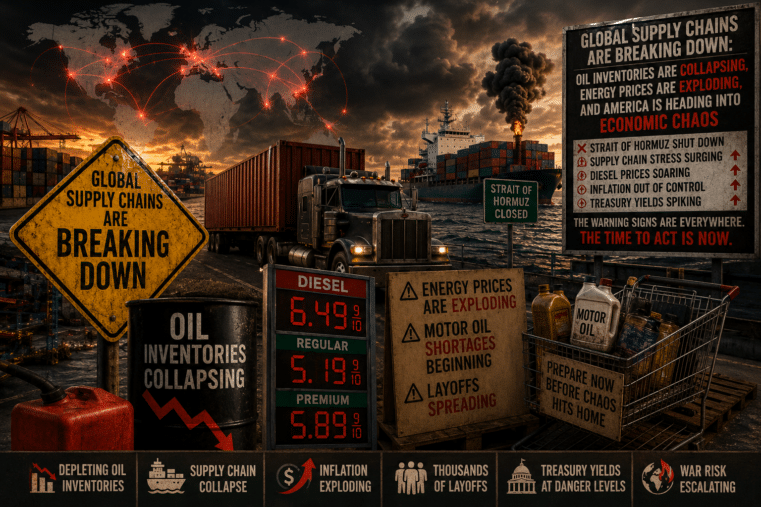
Warning Sign #1: Oil Prices Are Climbing Again
Energy has always been one of the fastest ways inflation can spread across the economy.
Recent geopolitical tensions in the Middle East have put global oil supply back into the spotlight, particularly concerns about disruptions to shipping through the Strait of Hormuz — one of the most important energy corridors on the planet.
Roughly one-fifth of the world's oil supply passes through this narrow waterway.
If shipments through that corridor are disrupted, even temporarily, energy prices can spike quickly.
And when oil prices rise, the impact spreads almost immediately:
- Transportation costs increase
- Manufacturing becomes more expensive
- Food production and distribution costs rise
Energy shocks have historically been one of the main triggers of stagflation because they push inflation higher while simultaneously slowing economic growth.
Warning Sign #2: The Job Market Is Starting to Cool
The second signal analysts are watching closely is the labor market.
For years, strong employment data helped keep the economy resilient even as inflation surged. A tight job market meant consumers had money to spend, helping sustain economic growth.
But recent reports suggest that momentum may be fading.
Signs include:
- Slower hiring activity
- Fewer job openings
- Early signs of rising unemployment
If that trend continues, it creates a difficult economic balance.
Inflation pressures remain elevated due to rising costs, but consumer spending begins to weaken as job security declines.
That combination is one of the core ingredients that can produce stagflation.
Warning Sign #3: Global Supply Chains Are Under Pressure Again
Another factor fueling concern is the renewed pressure on global supply chains.
Geopolitical conflict can disrupt not only energy markets but also shipping routes and trade flows that the modern economy depends on.
When key shipping lanes become unstable, the effects ripple outward:
- Shipping costs rise
- Delivery delays increase
- Commodity prices become more volatile
These disruptions can raise the cost of goods while simultaneously slowing economic activity — another classic stagflation dynamic.
The global economy today remains deeply interconnected, meaning disruptions in one region can quickly affect markets around the world.
Warning Sign #4: Financial Markets Are Getting Nervous
Markets are often the first place where economic anxieties appear.
Recently, analysts have noted growing concern among investors that the current environment could become particularly difficult for both stocks and bonds.
Under normal conditions, these two asset classes often move in opposite directions.
But stagflation creates a scenario where both can struggle at the same time.
Stocks may decline because corporate profits weaken during slower economic growth.
Bonds may decline because persistent inflation erodes the value of fixed interest payments.
That combination makes stagflation one of the most challenging environments for traditional investment strategies.
Why Economists Say This Still Isn’t the 1970s
Despite the renewed concern, most economists caution that today’s economy is very different from the one that experienced stagflation half a century ago.
Several structural changes have altered the economic landscape.
For one, workers today generally have less bargaining power than they did in the 1970s. Back then, strong unions often negotiated wage increases that kept pace with inflation, creating a self-reinforcing wage-price spiral.
Today that feedback loop is weaker.
Finally, the global economy has become more diversified and technologically advanced, which can help absorb shocks more effectively than in the past.
Still, these differences don’t eliminate risk entirely.
They simply change how economic stress might unfold.
The Real Issue: Multiple Pressures Are Building at Once
The real reason stagflation is being discussed again isn’t just one economic indicator.
It’s the convergence of multiple pressures happening at the same time.
Energy markets are unstable.
Employment data is softening.
Geopolitical tensions are disrupting trade routes.
Markets are showing signs of anxiety.
Each of these issues alone would be manageable.
But when they appear together, they create uncertainty about how the economy might evolve over the coming months.
And uncertainty is exactly what financial markets struggle with the most.
Final Thoughts
The return of stagflation chatter doesn’t mean the economy is headed straight back to the economic turmoil of the 1970s.
But it does highlight something important.
Economic stability can shift quickly when several warning signs begin flashing at once.
Oil prices, employment data, global supply chains, and financial markets are all sending signals that the economic environment may be entering a more volatile phase.
Whether those signals fade or intensify will determine the path forward.
But history has shown that when analysts begin revisiting economic risks that haven’t been discussed in decades, it’s usually worth paying attention.
The One Move Smart Readers Are Making Right Now
While economists debate inflation, recession risks, and slowing growth, something much larger is quietly unfolding inside the financial system.
Governments and central banks around the world are rapidly building the infrastructure for a new generation of digital money systems. Programs like the FedNow payment system and broader central bank digital currency (CBDC) initiatives are already laying the groundwork for programmable money and unprecedented financial oversight.
Many people won’t fully understand the implications until these systems are fully operational.
That’s why researchers and financial insiders have been urging individuals to understand what’s coming before the transition is complete.
One of the most widely circulated preparedness briefings on this subject is the Digital Dollar Reset Guide by Bill Brocius.
This guide explains:
- How the FedNow payment system fits into the evolving digital currency ecosystem
- The potential risks associated with CBDCs and programmable money
- How expanding financial surveillance could reshape personal financial freedom
- Practical strategies individuals can take now to protect their financial autonomy
If you recognize the warning signs that major changes are underway in the financial system, this guide is essential intelligence.