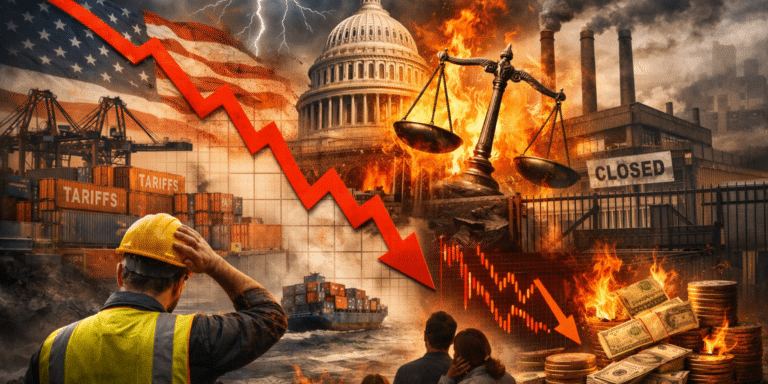
Tariff Shockwave: Economic Volatility Is Accelerating—and Most Americans Aren’t Prepared for What Comes Next

A Year of Tariff Chaos Has Redefined Economic Stability
Over the past year, U.S. trade policy hasn’t just shifted—it’s lurched unpredictably.
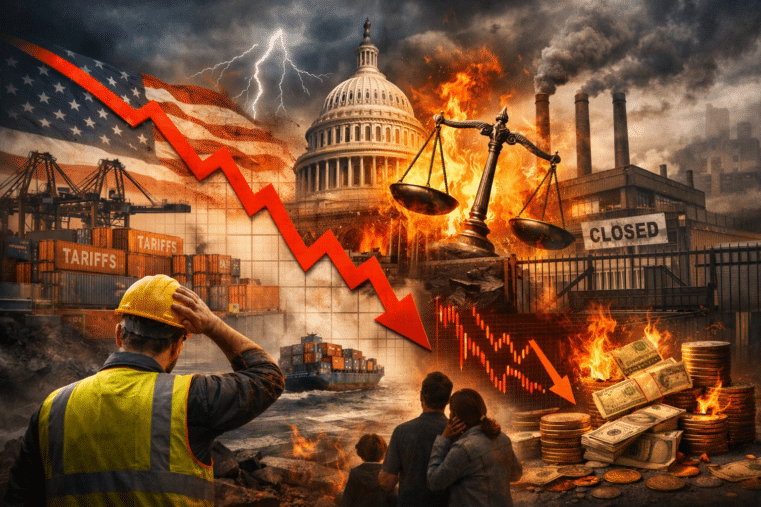
Tariff rates surged from roughly 2% at the start of 2025 to over 20% within weeks, before being partially rolled back after a Supreme Court decision limited the administration’s authority. Even now, rates remain elevated around 11%, with new tariffs already being planned.
This isn’t a controlled economic strategy.
It’s a system under stress.
More than 50 policy changes in a single year. Constant reversals. Emergency powers invoked and then stripped back. Entire industries forced to adapt overnight.
When businesses can’t plan, investment slows. When investment slows, growth weakens. And when growth weakens, pressure builds across the entire economy.
The Supreme Court Didn’t End the Strategy—It Complicated It
The recent legal ruling didn’t eliminate tariffs—it forced a workaround.
Instead of broad, flexible authority, policymakers are now turning to a patchwork of narrower tools to impose trade restrictions. These tools are slower, more rigid, and harder to adjust quickly.
That creates a new problem: less flexibility, more blunt force.
And blunt force policies tend to produce unintended consequences—especially in a global economy where supply chains are tightly interconnected.
What we’re seeing now is not a retreat from aggressive trade policy, but a more fragmented and potentially more disruptive version of it.
Businesses Are Absorbing the Shock—For Now
Despite fears of runaway inflation, the immediate effects have been more subtle—but no less serious.
- Input costs for manufacturers are rising
- Consumer prices are increasing unevenly
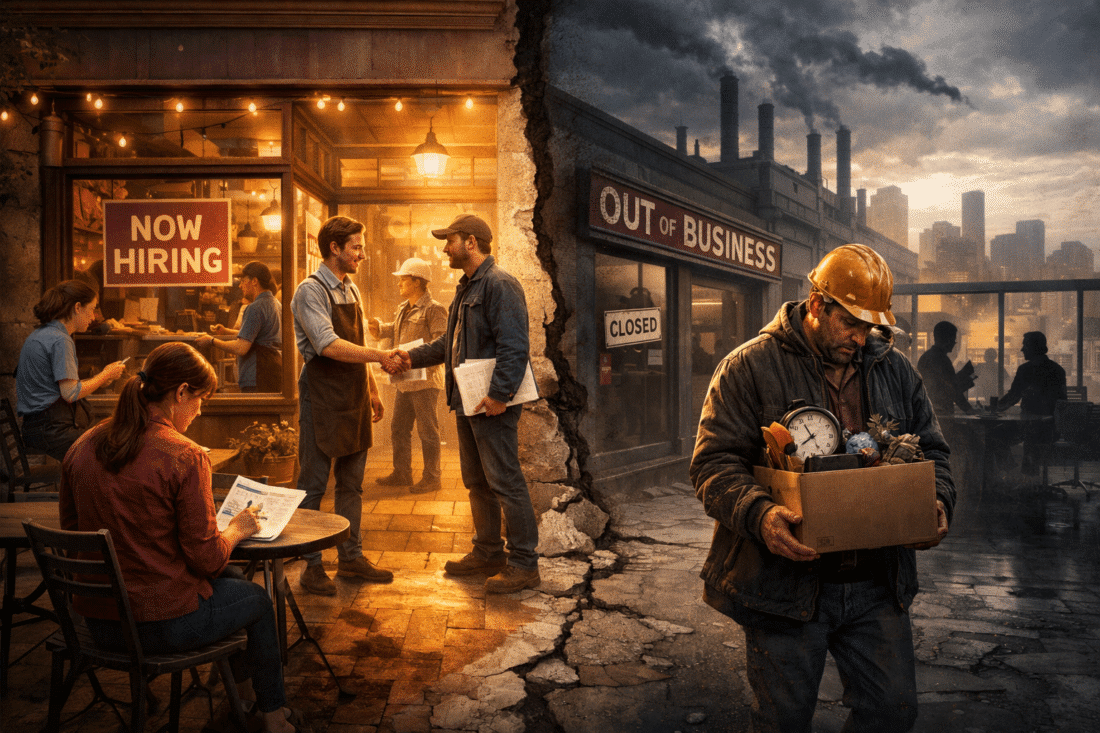
- Hiring in manufacturing is declining
- Long-term planning has become more difficult
Nearly 90,000 manufacturing jobs have been lost since the initial tariff surge.
At the same time, surveys show that while activity has recently ticked upward, price pressures are climbing to levels not seen in years.
This is what economic strain looks like in its early stages—not collapse, but compression.
Margins tighten. Hiring slows. Confidence erodes.
Volatility Is the Real Threat—Not Just Higher Costs
Most coverage focuses on the level of tariffs.
That’s a mistake.
The bigger issue is how often those levels are changing.
Rapid swings in policy create an environment where:
- Companies delay expansion
- Supply chains become less efficient
- Costs are passed unpredictably to consumers
- Markets react sharply to political signals
Even insiders are acknowledging this risk.
It’s not just the tariffs—it’s the instability they create.
And instability doesn’t stay contained. It spreads through hiring decisions, investment strategies, and ultimately household finances.
New Tariff Threats Signal Escalation, Not Resolution
If the past year was disruptive, the next phase could be even more aggressive.
Proposals are now circulating for:
- Tariffs as high as 100% on pharmaceutical companies
- Restructured import taxes on steel and aluminum
- New mechanisms to replace previously blocked tariffs
This marks a shift from reactive policy to targeted economic pressure.
Industries are no longer just adapting to global competition—they’re being directly pressured to comply with domestic policy goals.
That raises a critical question:
Where does this stop?
The Global System Has Already Been Altered
Even if tariffs are scaled back again, the damage to predictability is done.
Global trade depends on stability—clear rules, consistent enforcement, and long-term planning.
What we’ve seen instead is rapid escalation followed by partial reversal, then renewed escalation.
That kind of environment forces businesses to rethink everything:
- Where they manufacture
- Who they source from
- How much risk they’re willing to take
Once those shifts begin, they don’t simply reverse.
The system doesn’t snap back—it reshapes.
Why This Matters More Than You’ve Been Told
This isn’t just about trade policy or political strategy.
It’s about how quickly economic conditions can change—and how little warning most people get before those changes hit their finances directly.
Rising costs. Job instability. Market volatility.
These are not isolated issues.
They are signals.
Signals that the system is becoming more reactive, more pressured, and less predictable.
And in that kind of environment, waiting for clarity is not a strategy.
The Bottom Line: Instability Is No Longer Temporary
The past year has made one thing clear:
Economic volatility is no longer an exception—it’s becoming the baseline.
Tariffs are rising, falling, and rising again. Legal constraints are reshaping policy tools. Industries are under pressure. Costs are creeping upward.
This is not a one-time disruption.
It’s a structural shift.
Take Action Before the Next Phase Begins
Periods of instability don’t announce themselves in advance—they build quietly, then accelerate.
If you’re paying attention, the signals are already here.
For those who understand where this is heading, the next step is preparation.
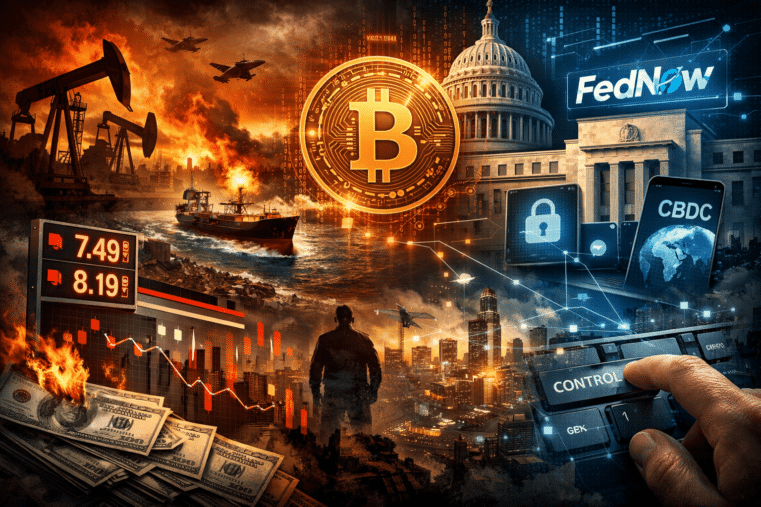
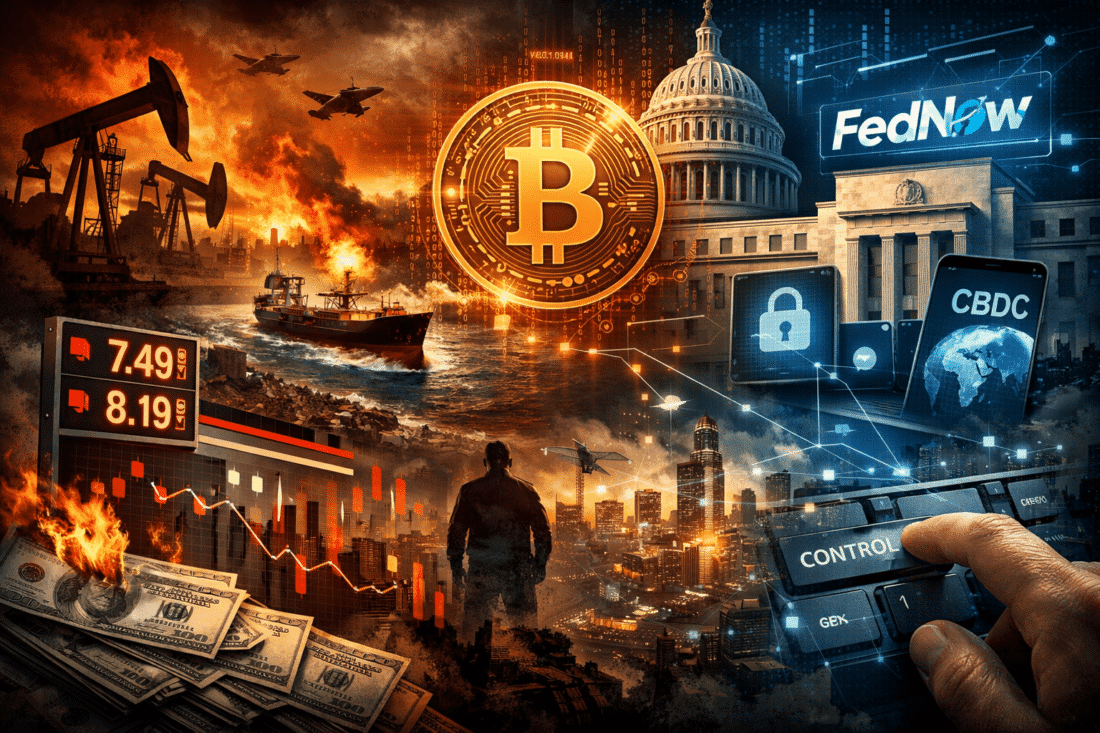
That means understanding how evolving systems like FedNow, the push toward central bank digital currencies (CBDCs), and the broader Digital Dollar Reset could reshape financial control, transaction monitoring, and personal autonomy.
Get ahead of what’s coming.
Download The Digital Dollar Reset Guide now and learn how to protect your financial position before these changes accelerate.