THE HIDDEN HORMUZ TAX: WHY GOLD MAY BE YOUR BEST PROTECTION FROM RISING GLOBAL INSTABILITY

The Toll You Never Agreed to Pay
Let me put this in plain English.
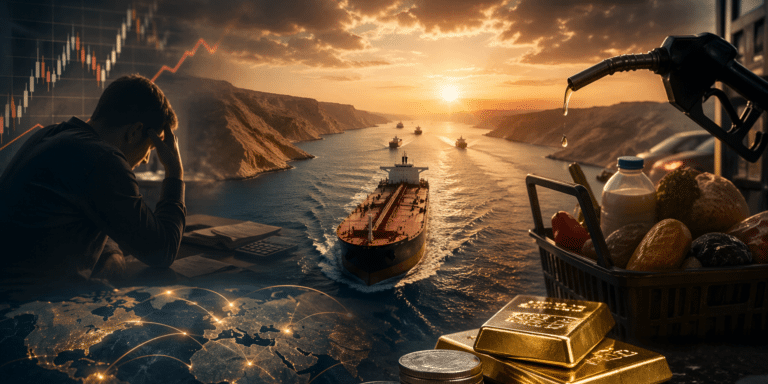
There’s a narrow strip of water halfway across the world—the Strait of Hormuz. You may never see it, never think about it, and yet it has more influence over your cost of living than most politicians you’ll ever vote for.
Roughly a fifth of the world’s oil passes through that chokepoint. When tensions rise—even just rumors of disruption—energy prices react immediately. And when energy prices rise, everything rises.
Gas. Groceries. Shipping. Rent. Utilities.
That’s the “Hormuz toll.” And make no mistake—you’re paying it.
Why This Matters More Than Ever
Here’s the part most folks miss.
The global economy today is built on razor-thin margins and just-in-time supply chains. That means there’s very little cushion when something goes wrong. A disruption doesn’t stay contained—it spreads.
Think of it like a clogged artery.
You don’t need a full blockage to cause damage. Even partial restriction raises pressure across the entire system. That’s exactly what happens when a key shipping route is threatened.
And in today’s environment—where geopolitical tensions are high and trust between nations is low—that risk isn’t going away anytime soon.
The Real Problem: How the System Passes the Cost to You
Now here’s where it hits home.
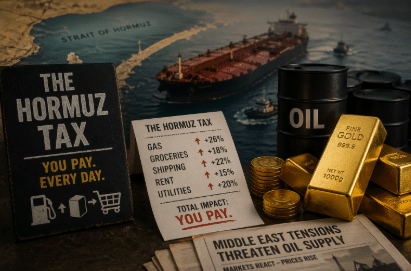
When these disruptions happen, governments and central banks don’t absorb the cost. Corporations don’t absorb the cost.
You do.
It shows up quietly:
- Higher prices at the pump
- Increased food costs
- More expensive goods
- Shrinking purchasing power
And if that wasn’t enough, there’s another layer to this.
When prices rise, central banks often respond by printing more money or adjusting policy in ways that weaken the currency further. It’s like trying to fix a leak by turning up the water pressure.
The result?
Your dollars buy less… and less… and less.
Fiat Currency: A Leaky Bucket
I’ve spent decades in finance, and if there’s one thing I’ve learned, it’s this:
Fiat currency doesn’t protect you in times of stress—it exposes you.
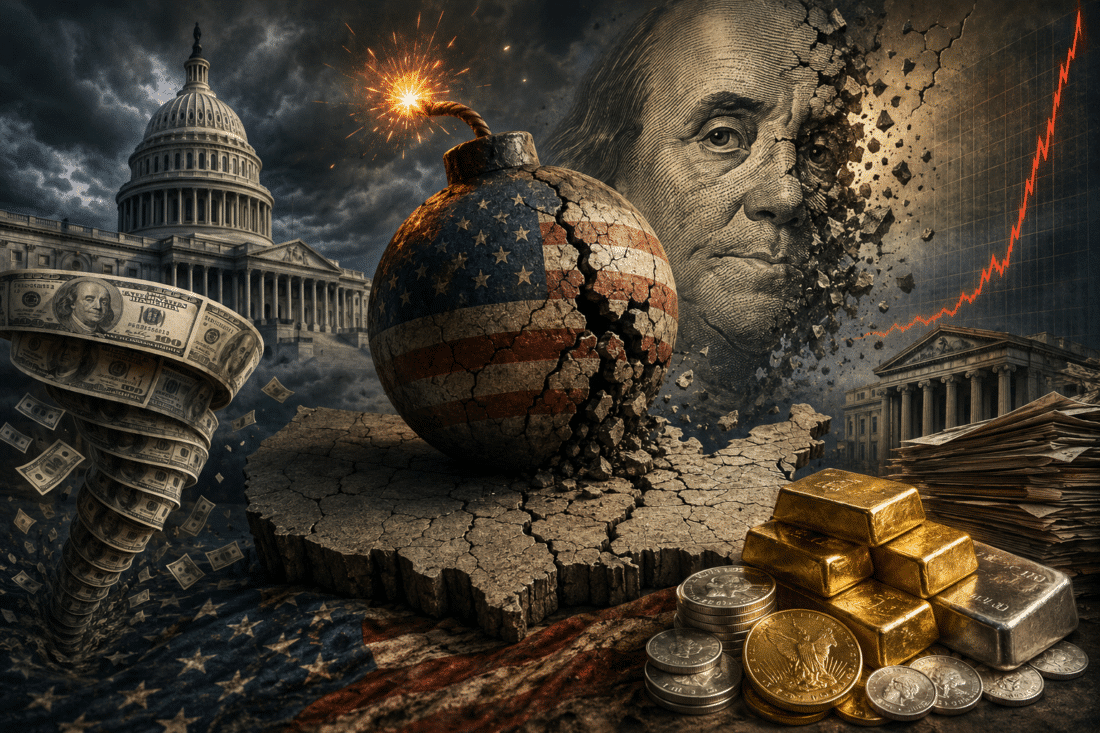
Think of your money like a bucket. Every time there’s a global shock—like a potential disruption in Hormuz—it pokes another hole in that bucket.
Inflation is the leak.
Policy responses widen it.
And over time, what you’ve worked hard to save slowly drains away.
Gold Doesn’t Play That Game
Now let’s talk about something different.
Gold doesn’t rely on shipping lanes. It doesn’t depend on political stability. It doesn’t care about central bank decisions.
It just is.
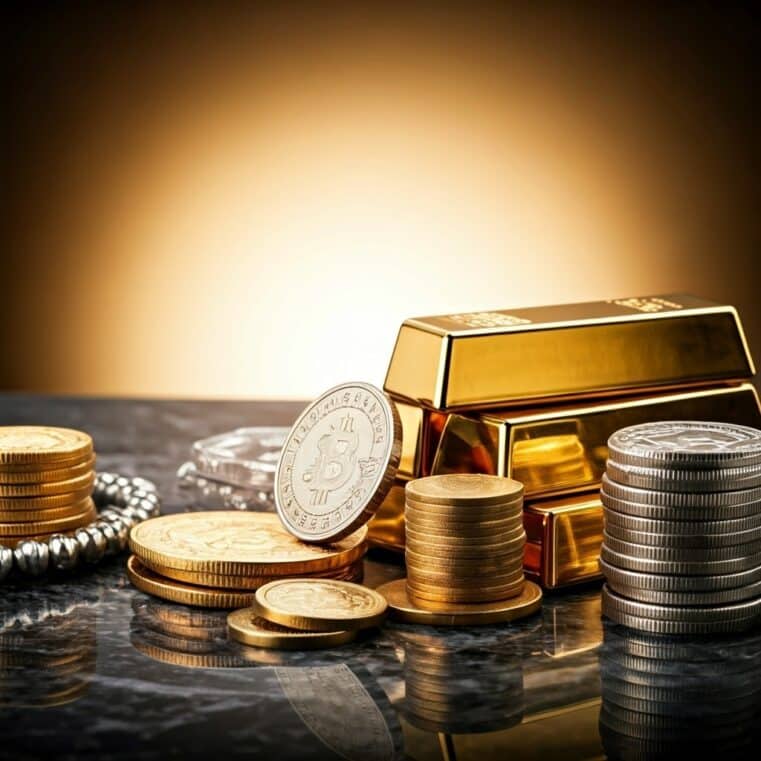
For thousands of years, gold has held its value because it sits outside the system. It’s not someone else’s liability. It’s not a promise. It’s a tangible store of wealth.
When the system gets shaky—when costs rise, currencies weaken, and uncertainty spreads—gold tends to do what it’s always done:
Hold the line.
Sometimes it even rises while everything else struggles.
Why This Moment Is Different
I want you to really hear this.
We’re not just dealing with one risk. We’re looking at a stack of them:
- Fragile global supply chains
- Rising geopolitical tensions
- Increasing dependence on key chokepoints
- Ongoing currency debasement
That combination is dangerous.
Because when multiple pressure points hit at once, the effects don’t just add up—they multiply.
And when that happens, the people holding only paper assets are usually the ones left scrambling.
My Take: Don’t Wait for the Next Shock
I grew up in a working-class family. I know what it means to stretch a dollar and worry about making ends meet.
That’s why this matters so much to me.
Because the system we’re living in today is quietly shifting risk onto everyday people. It’s not always obvious. It doesn’t always make headlines.
But it shows up in your life.
And by the time most people realize what’s happening, the damage is already done.
You don’t need to predict the next crisis. You just need to recognize the pattern.
And right now, the pattern is clear.
Protecting Yourself Starts With One Decision
You can’t control global shipping routes.
You can’t control geopolitical tensions.
And you definitely can’t control central bank policy.
But you can control how you protect your wealth.
That’s where gold and silver come in—not as speculation, but as insurance. As a way to step outside a system that’s showing more cracks by the day.
Final Thought: The Toll Isn’t Going Away
The Strait of Hormuz is just one example.
There will always be another chokepoint. Another disruption. Another “unexpected” event that sends shockwaves through the economy.
And each time, the question is the same:
Will you be exposed… or protected?
Take Action Now
If you’re serious about protecting what you’ve worked for, I strongly recommend you take the next step.
Don’t wait until the next crisis makes the decision for you.