Trump’s Economic Revolution: The Reshoring Strategy That’s Changing America

America’s Industrial Comeback: The Master Plan Unfolds
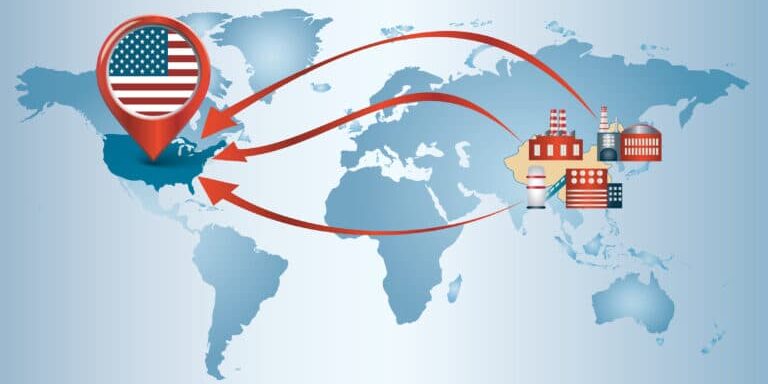
A seismic shift is underway. For years, America’s industrial base was gutted by corporate elites chasing cheap labor overseas, selling out the nation’s long-term prosperity for short-term profits. But under Trump’s leadership, we’re seeing a return to economic nationalism—an aggressive strategy to bring critical manufacturing back to U.S. soil.
Take TSMC’s $40 billion semiconductor plant in Arizona, a project that will soon begin producing 4-nanometer chips—some of the most advanced in the world. By 2028, this same facility will be churning out 2-nanometer chips, ensuring that America no longer relies on Taiwan, South Korea, or—God forbid—China for the technology that powers our military, infrastructure, and economy.
This is not a coincidence. The groundwork was laid during Trump’s first term when his administration made it clear: if you want to access the U.S. market, you must invest in America. TSMC got the message loud and clear. Now, tens of thousands of jobs have already been created, with many more to come.

But this is only the beginning. Trump’s next move? Tariffs on foreign semiconductors and strategic industries, ensuring that U.S. manufacturers can thrive without being undercut by cheap, government-subsidized competition from China and elsewhere.
Tariffs: The Unapologetic Weapon Against Globalist Exploitation
Mainstream economists love to whine about tariffs, calling them “protectionist” or “harmful to consumers.” But let’s be honest—other nations have weaponized trade policies for decades. China manipulates its currency, subsidizes industries, and floods global markets with cheap goods. Meanwhile, Germany and Japan built their economies behind the walls of strategic industrial policies.
So why should America continue playing by rules designed to keep us weak?
Trump’s 127% to 478% tariffs on golf carts and other foreign-manufactured vehicles are already proving that aggressive trade policies work. Kandi Technologies, a Chinese manufacturer, is now investing $100 million into U.S. battery production and launching a $30 million American production line for utility vehicles.
Let’s not gloss over that—a Chinese company is bringing production to America because Trump’s tariffs made it too costly to stay offshore.
If such extreme measures are what it takes to bring back manufacturing, then so be it. The idea that “tariffs hurt consumers” is a globalist lie, designed to keep Americans dependent on foreign goods while our industries collapse.
Tariffs are not just about economics; they’re about national security. If we don’t produce our own semiconductors, batteries, pharmaceuticals, and essential goods, we’re at the mercy of our adversaries.
The Reality of Reshoring: A Short-Term Sacrifice for Long-Term Strength
Of course, bringing production back home isn’t painless. In the short term, prices on some goods may rise—but this is an investment in long-term stability.
It takes years to build a semiconductor foundry. TSMC’s Arizona plant has been five years in the making, but once fully operational, it will permanently shift the global balance of technological power in America’s favor.
Smaller projects, like Kandi’s U.S. vehicle plant, take far less time to get off the ground, meaning we’ll see tangible job growth and economic benefits sooner rather than later.
And let’s be clear—this is not a one-off event. Trump’s economic policies are engineered to make reshoring the rule, not the exception. If you’re a CEO running a foreign-based manufacturing operation, you have two choices: move production to the U.S. or get hit with tariffs so severe that your bottom line crumbles.
This isn’t protectionism—this is economic survival.
The Global Power Shift: Winners and Losers
This reshoring strategy will reshape the global economic order in ways that few are prepared for.
Winners:
✅ American workers: More jobs, higher wages, and the return of an industrial base that was once the backbone of the middle class.
✅ U.S. technology leadership: With semiconductor production secured, America can maintain dominance in AI, defense, and automation—without relying on Taiwan or China.
✅ Domestic industries: More manufacturing means less dependence on foreign supply chains, making the U.S. economy resilient against geopolitical shocks.
Losers:
❌ China: The days of exploiting cheap labor and slave-wage factories to flood the U.S. with goods are coming to an end.
❌ Globalist corporations: Companies that outsourced manufacturing for quick profits are now forced to reinvest in America—or face financial ruin.
❌ The Federal Reserve’s easy money cartel: A stronger manufacturing base means less reliance on financialization, putting an end to the casino-style speculation that dominates Wall Street.
The Final Word: What Comes Next?
This is the beginning of a major economic transformation. If Trump’s tariffs are expanded to more strategic industries, we will see a manufacturing revival unlike anything in the last 50 years.
But it’s not just about policy—it’s about strategy. The globalists will fight back. Expect to see Wall Street-backed politicians and media outlets pushing anti-tariff propaganda, claiming that these policies will “hurt the economy.” Don’t fall for it.
If you’re not preparing for what’s coming, you’re already behind. The battle for economic sovereignty is in full swing—and those who understand it will position themselves for success, while the unprepared are left scrambling.
Take Action Now
The financial landscape is shifting fast. Are you ready?
📘 Download my free book, "Seven Steps to Protect Your Bank Accounts," and learn how to safeguard your assets in an era of economic warfare. Get your copy here.
📕 For those who prefer hardcover, grab a discounted copy of "The End of Banking as You Know It" by Bill Brocius—a deep dive into the collapse of fiat money and the rise of alternative financial systems. Order here.
The era of cheap imports and globalist exploitation is ending. The question is—are you prepared for what comes next?