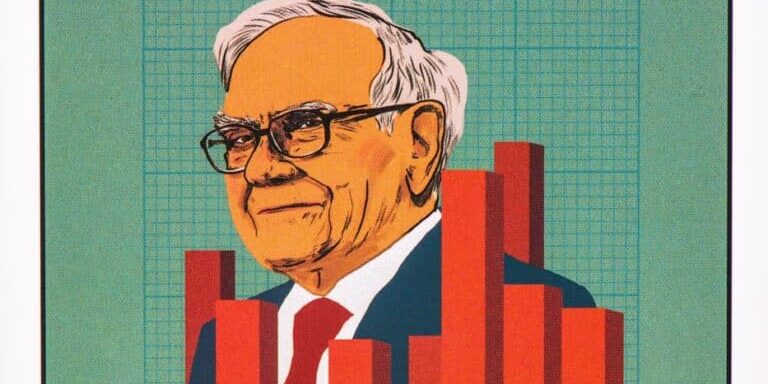
Warren Buffett’s Blind Spot: A Brilliant Capitalist with a Keynesian Soft Spot

Buffett Nails the Problem, Then Praises the Perpetrators
Warren Buffett’s 2024 letter to Berkshire Hathaway shareholders begins with encouraging signs of clarity. He warns that:
“Paper money can see its value evaporate if fiscal folly prevails.”
That’s true. And he deserves credit for stating it plainly. Buffett goes on to describe the beauty of capitalism: how individual savings, wisely deployed, generate real goods, real services, and real wealth. These remarks echo the spirit of the Austrian School—Mises, Rothbard, and others who understood that wealth creation flows from productive effort and deferred consumption, not the printing press.

But Buffett's sharp insight into capitalism's mechanics is quickly followed by an endorsement of a system that punishes it.
A Confused Defense of the “American Process”
Buffett rightly points out that American history includes plenty of hucksters and failed ventures—an inevitable feature of any open economy. He then credits American savers for building unprecedented prosperity, which again, is on point.
But then, in a strange twist, he praises the federal government as if it were a co-equal partner in this success:
“So thank you, Uncle Sam… Spend [our taxes] wisely. Take care of the many who, for no fault of their own, get the short straws in life… and never forget that we need you to maintain a stable currency…”
This is where Buffett loses the plot.
The U.S. government is the primary driver of monetary instability—not the solution to it. Since abandoning the gold standard in 1971, the U.S. dollar has lost over 85% of its purchasing power. Government spending has ballooned into oblivion, the Federal Reserve now monetizes multi-trillion-dollar deficits, and inflation—though manipulated downward in official metrics—erodes the average American's standard of living with every passing year.
Taxes Are Not a Badge of Honor
Buffett proudly notes that Berkshire Hathaway has paid $101 billion in income taxes—more than any other U.S. corporation. But there’s nothing noble about feeding a bloated bureaucracy that squanders trillions, perpetuates endless war, and undermines the very free market principles that Buffett champions in his investments.
Let’s not forget: taxation is not voluntary. It is coerced. It is extracted from productive citizens under the threat of fines, asset seizure, and imprisonment. As Murray Rothbard famously wrote, taxation is “legalized theft”—a forced transaction with no consent, no accountability, and no genuine return on value.
Buffett’s father, Howard Buffett, understood this well. He was a staunch advocate of sound money and personal liberty, and he corresponded with the likes of Rothbard and Mises. One wonders what he would think of his son now, praising Uncle Sam like a loyal vassal while ignoring the state’s role in monetary debasement.
Capital Misallocation Isn't Capitalism's Fault—It’s Fiat’s
Buffett laments malinvestment, failed ventures, and financial scams as inherent flaws in the capitalist system. But he should know better.
Austrian economists have made it abundantly clear: malinvestment is the product of central bank manipulation. Artificially low interest rates and credit expansion send false signals into the market, distorting time preference and leading to unsustainable booms—followed by painful busts.
This is not capitalism at work. It’s a fiat-fueled mirage, propped up by central banks and collapsed by their own incompetence.
If Buffett is genuinely concerned about scam artists and economic dislocation, he should aim his critique at the Federal Reserve, not the free market.
The Contradiction: Warning About Fiat While Praising the State That Prints It
Perhaps the most glaring contradiction in Buffett’s letter is his warning about the dangers of inflation—while simultaneously trusting the very institutions responsible for it to provide “currency stability.”
This is like asking a pyromaniac to manage the fire department.
You cannot lament the evaporating value of the dollar while praising the political class that authorized $34 trillion in debt, enabled central bank interventions at every market hiccup, and created the conditions for rampant capital misallocation and collapsing purchasing power.
Buffett knows this. But decades of operating within a crony-capitalist system may have softened his ability—or his willingness—to call it what it is.
Warren Buffett: A Capitalist in Deed, a Statist in Word
Here’s the paradox. Warren Buffett has built one of the greatest investment records in history by applying principles of low time preference, rational allocation, and long-term value—tenets entirely in line with Austrian economics.
But in public discourse, he often drifts into Keynesian platitudes and a deferential tone toward the very institutions that undermine those same principles.
It’s possible Buffett’s worldview has been shaped by the post-WWII Pax Americana era—a time of immense growth in spite of growing state control, not because of it. He may see the government and the market as partners, rather than the market functioning best despite the state’s interventions.
But for younger investors, entrepreneurs, and citizens trying to protect their wealth and freedom in this era of terminal debt, rising surveillance, and financial repression, Buffett’s faith in the system is not just naïve—it’s dangerous.
How to Follow Buffett’s Wisdom Without Falling for the System
Buffett's core message about saving, investing, and long-term thinking is still gold. But the system he defends is busy melting that gold down and replacing it with IOUs and digital leash money.
If you want to follow Buffett’s legacy, follow his actions, not his public endorsements. Own real assets. Avoid leverage. Ignore fads. Understand intrinsic value.
And most importantly—don’t trust the system.
Get Prepared—Before Buffett's Contradictions Become Your Crisis
If you're reading this, you're already ahead of the curve. But don't stop here.
Here’s how to protect yourself:
- Download Bill Brocius' free guide, 7 Steps to Protect Your Account from Bank Failure – your first line of defense when the dollar dies. Click here to access it.
- Buy Bill’s book, End of Banking As You Know It – the real blueprint for monetary independence.
- Subscribe to the Inner Circle Newsletter for $19.95/month to get weekly insights into economic instability and real wealth strategies—straight from the mind of Bill Brocius.
Buffett may not say it, but we will: the old system is cracking. And only those who prepare now will survive what’s next.
— Eric Blair