Americans Are Raiding Their 401(k)s — And Washington Is Taking Notes

A Warning Sign the Media Won’t Spell Out
Americans aren’t supposed to touch their 401(k)s early. That’s the deal. You work. You save. You retire with dignity.
But that deal is breaking down.
More workers are pulling money out early—hardship withdrawals, they call them. Sounds harmless. It’s not.

This is a signal. A loud one.
It means paychecks aren’t stretching far enough. It means savings accounts are empty. It means the cushion is gone.
And when millions of people hit that same wall at the same time, it stops being personal. It becomes systemic.
When Survival Eats the Future
Let’s be clear: nobody wants to raid their retirement.
People do it because they have no other option.
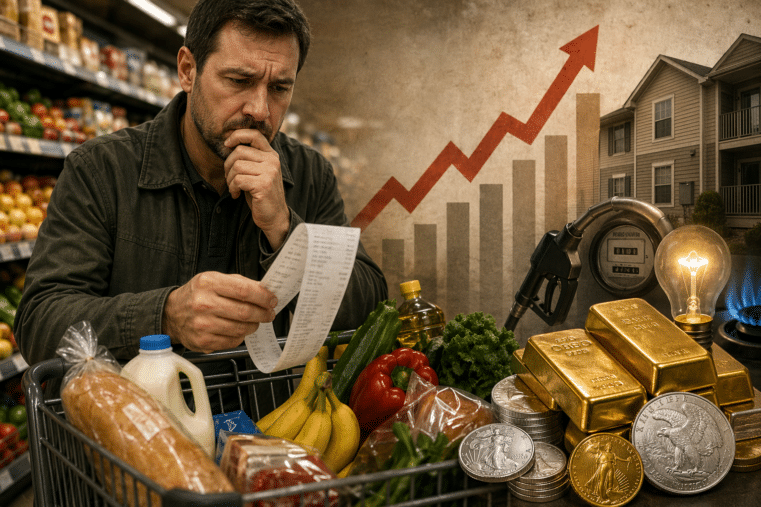
- Medical bills pile up
- Rent keeps climbing
- Groceries don’t get cheaper
- Wages lag behind reality
So Americans do what they’ve always done—they adapt. They survive.
But survival comes at a cost.
Every dollar pulled from a 401(k) today is a dollar that won’t be there tomorrow. Multiply that across millions of households, and you’ve got a retirement crisis brewing in plain sight.
From Private Savings to Public Concern
Here’s where things shift.
Individually, it’s your money. Your choice.
Collectively? Washington sees a problem to manage.
Because when retirement accounts shrink:
- Future retirees may need more government support
- Pension systems face pressure
- Economic stability gets shakier
And that’s when the language changes.
You’ll start hearing phrases like:
- “Protecting long-term savings”
- “Ensuring stability”
- “Responsible access”
Sounds reasonable. But those words often come with strings attached.
The Slippery Slope of “Guardrails”
We already have rules around 401(k) withdrawals:
- You have to qualify
- You need documentation
- You pay penalties
That’s just the beginning.
If hardship withdrawals keep rising, don’t be surprised if the next steps include:
- Stricter approval processes
- Limits on how funds can be used
- Delays or caps on withdrawals
Step by step, access gets tighter.
Not overnight. Gradually.
That’s how policy works.
Digital Money Means Digital Control
Now layer in the next piece: financial technology.
Systems like real-time payment networks are making money move faster than ever. That brings convenience—but also capability.
Because when money becomes fully digital:
- Transactions can be tracked in real time
- Rules can be enforced automatically
- Access can be adjusted instantly
That doesn’t mean control is inevitable. But it does mean control becomes possible in ways it wasn’t before.
And when systems are under stress, possibilities tend to become policies.
The Bigger Picture Most People Miss
This isn’t just about retirement accounts.
It’s about a broader shift in how financial systems are managed.
What used to be:
- Personal
- Long-term
- Hands-off
Is slowly becoming:
- Monitored
- Conditional
- Integrated into larger systems
Again—not all at once. But direction matters.
And right now, the direction is toward more oversight, not less.
The Real Question Americans Should Be Asking
If people are forced to tap their future just to get through the present, the problem isn’t just behavior—it’s the system itself.
So the real questions are:
- Why are so many Americans in this position?
- Why are wages lagging while costs surge?
- Why is the “safety net” increasingly tied to restrictions?
Those are harder conversations. But they matter.
Because if the response to financial strain is tighter control instead of stronger independence, the long-term consequences won’t be small.
Final Word: Stay Aware, Stay Prepared
This moment matters.
Not because hardship withdrawals exist—but because of what they signal, and what may come next.
Pay attention to how the conversation evolves. Watch the policies, not just the headlines.
Because once financial access becomes conditional, it rarely swings back to full freedom.
Take Action
If you want deeper analysis on where this is heading—and how to stay ahead of it—join the Inner Circle for exclusive insights and strategies.