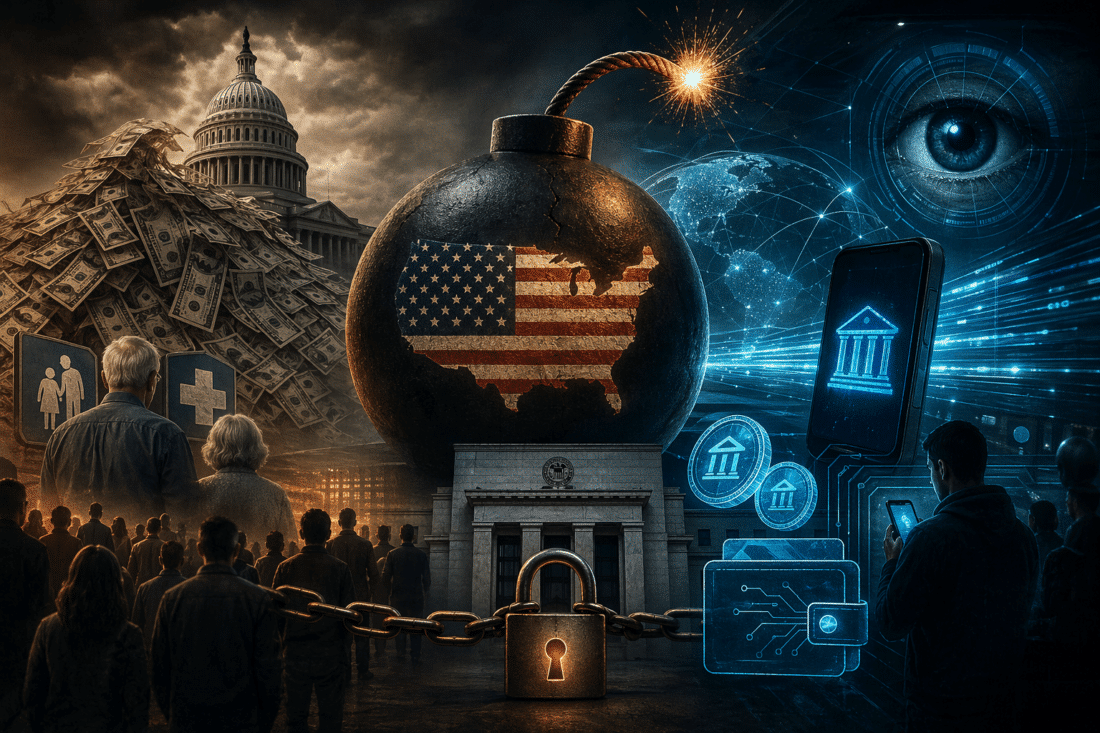
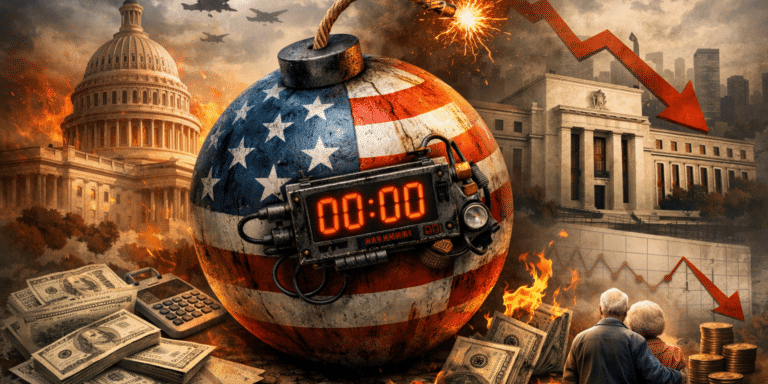
America’s Debt Time Bomb Is Ticking — And Washington Knows It

The Warning Shot Nobody Heard
While the media fixates on geopolitics and stock gains, a far more serious signal slipped through the cracks.
A former Treasury Secretary—one who helped steer the country through the 2008 crisis—has raised concerns about weakening demand for U.S. debt. That’s not abstract. That’s the foundation of the entire financial system.
If demand for Treasuries falters, borrowing costs rise. And when borrowing costs rise, everything changes.

Not gradually. Quickly.
The $39 Trillion Problem
The United States is carrying roughly $39 trillion in federal debt. That number alone is staggering—but the structure of that debt is what should raise eyebrows.
A massive portion must be refinanced in the near term. That means rolling over old debt into new debt, often at higher interest rates.
Here’s the issue:
- Interest costs are already over $1 trillion annually
- Even modest rate increases could push that toward $2–3 trillion
- That crowds out spending, strains budgets, and limits policy options
This isn’t a distant problem. It’s happening now.
When the Fed Becomes the Only Buyer
One scenario being discussed in policy circles is simple, but serious:
What happens if fewer investors want U.S. Treasuries?
If that demand weakens, the Federal Reserve may step in more aggressively to stabilize the market. Historically, that has meant large-scale bond buying—sometimes referred to as yield curve control.
That approach can keep rates artificially low. But it comes with trade-offs.
The Hidden Cost: Financial Repression
There’s a term that doesn’t get much airtime: financial repression.
It describes a situation where interest rates are held below inflation. On paper, everything looks stable. In reality, purchasing power erodes.
This has happened before.
In the 1940s:
- Debt levels were high following WWII
- The Fed capped interest rates
- Inflation surged well above those rates
The result? Savers lost ground year after year.
Not through a crash. Through slow erosion.
Could History Repeat?
Today’s environment is different—but the pressures are familiar:
- High government debt
- Rising interest costs
- Political resistance to spending cuts
- Limited appetite for significantly higher taxes
That leaves policymakers with difficult choices. None are painless.
Possible responses include:
- Managing rates to keep borrowing costs contained
- Adjusting tax policy over time
- Allowing inflation to reduce the real value of debt
Each path affects everyday Americans differently—but none leave savings untouched.
Taxes: The Other Lever
History shows that debt burdens are rarely solved through monetary policy alone.
In the 1940s, the tax base expanded dramatically. More Americans paid income taxes than ever before.
Today, the starting point is different. Tax rates are already significant for many households.
Still, when deficits widen, revenue becomes part of the conversation. That’s not speculation—it’s arithmetic.
What This Means for You
This isn’t just a policy debate. It’s personal.
If interest rates, inflation, and tax policy all shift in response to debt pressures, the impact shows up in:
- Retirement accounts
- Cost of living
- Investment returns
- Job markets and wages
Periods like this reward preparation—not panic, but awareness.
Diversification matters. So does understanding how different assets behave in changing economic conditions.
The Bottom Line
The warning signs are no longer theoretical.
Rising debt. Increasing refinancing needs. Policy discussions about how to manage it all.
These are signals worth paying attention to.
Because when the system adjusts, it doesn’t send invitations. It moves—and people react after the fact.
Stay Ahead of What’s Coming
If you want deeper analysis on where the economy is heading—and how to position yourself in uncertain times—consider joining the Inner Circle.
Get direct insights, strategies, and breakdowns designed to help you make sense of a rapidly shifting financial landscape.