BRICS Advocates for Reduced US Dollar Dependence in Oil Trade

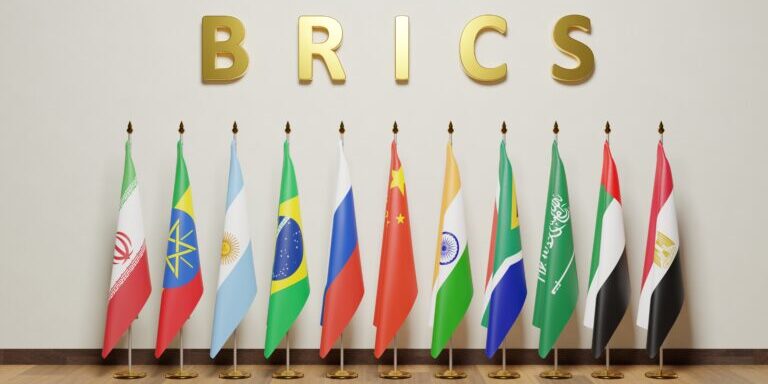
BRICS member Russia is urging countries in the Middle East to stop accepting the US dollar for oil payments. Russian President Vladimir Putin is hitting out at the US for pressing economic sanctions against the country. The White House sanctioned Russia after it invaded its neighboring country Ukraine in February 2022. Russia has been reeling under severe economic pressure since then as the inflow of funds through direct trade has dried up.
Notwithstanding the sanctions, Putin has called for the Middle East to deliver a tit-for-tat outcome against the US. He urged oil-producing countries, including BRICS nations Egypt, and the UAE to not accept the US dollar for oil payments.
BRICS: Middle East Can End US Dollar Dominance Through Oil
Putin explained that the Middle East has the power to end the US dollar’s global dominance through oil and gas. “If oil producers in the Middle East stop using the US dollar, it will be the end of the dollar,” he said. Read here to know how many sectors in the US will be affected if BRICS ditches the dollar for trade.

It is long been speculated that BRICS inducted oil-producing countries into the alliance last year to push the de-dollarization agenda. BRICS is aiming to make oil-producing nations accept local currencies for cross-border settlements and not the US dollar.
Saudi Arabia is the main oil-producing nation that has kept the option of joining BRICS on hold. The Kingdom is weighing its options of being a part of the bloc and is yet to conclude its decision. However, Saudi Arabia might decline BRICS membership as its economy is looking to thrive beyond the oil and gas segment.
The Kingdom is now opening up the country to tourism and needs the help of the US, Europe, and the West. In conclusion, the Middle East might not stop accepting the US dollar for oil trade as it needs support from the West for tourism.
This article originally appeared on Watcher.Guru