BRICS Nations Just Crossed 6,000 Tonnes of Gold—What Do They Know That the West Doesn’t?

BRICS+ Gold Reserves Have Surged Past 6,000 Tonnes
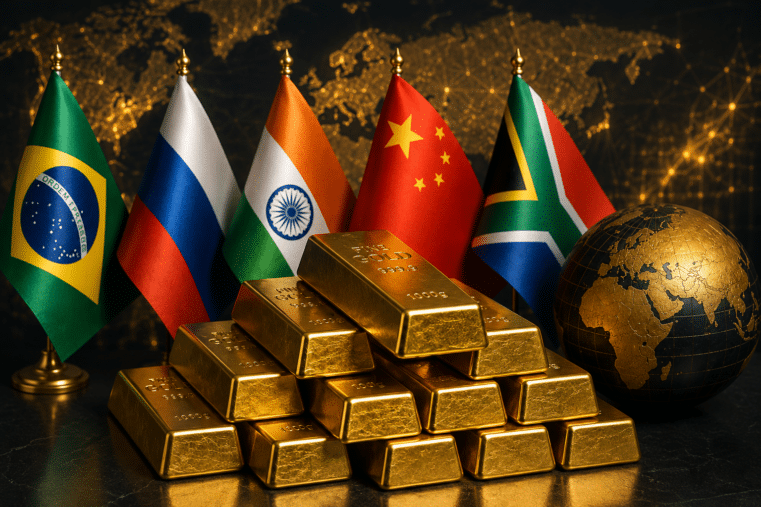
The BRICS+ alliance—led by Brazil, Russia, India, China, and South Africa—has dramatically increased its gold holdings over the past decade. Collectively, BRICS+ nations now hold more than 6,000 tonnes of gold reserves, marking one of the most significant reserve diversification efforts in modern history.
While financial media often focuses on quarterly economic data, central banks are making decisions based on decades-long strategic outlooks. Their actions reveal where they believe the global monetary system is headed.
Gold isn't being accumulated by accident.

It's being accumulated because policymakers increasingly see the world moving away from a single dominant reserve currency system toward a more multipolar financial order.
Why Central Banks Are Choosing Gold Over Dollars
Gold possesses one characteristic no fiat currency can match.
It belongs to nobody.
Unlike the U.S. dollar, euro, yuan, or any other national currency, gold carries no counterparty risk. It cannot be printed into existence. It cannot be frozen by a foreign government. It cannot be sanctioned. It cannot be digitally erased.
This is one reason discussions surrounding a potential BRICS currency often include gold, as many nations view it as a neutral reserve asset that exists outside the control of any single government or financial system.
For nations seeking greater financial independence, physical gold represents a neutral reserve asset that sits outside the political control of any single country.
That matters more today than it did twenty years ago.
As geopolitical tensions rise and economic blocs become increasingly fragmented, many governments are reassessing how much exposure they want to maintain to dollar-denominated assets.
Gold offers an alternative.
China Continues Its Quiet Gold Buying Campaign
Among all BRICS nations, China has attracted particular attention.
The People's Bank of China has steadily expanded its official gold reserves while simultaneously encouraging broader participation in domestic precious metals markets.
What makes China's strategy noteworthy isn't merely the quantity of gold being purchased.
It's the consistency.
Month after month, year after year, Beijing has demonstrated a clear commitment to increasing its exposure to physical gold while reducing vulnerability to external financial pressures.
China understands that reserve assets serve not only economic purposes but strategic ones as well.
The larger a nation's gold reserves become, the greater its financial flexibility during periods of uncertainty.
Russia's Gold Strategy Looks Increasingly Intentional
Russia's approach has been even more aggressive.
For years, Moscow systematically reduced its holdings of U.S. Treasury securities while expanding gold reserves.
Many Western analysts dismissed these moves as political theater.
Today, they appear far more strategic.
By building substantial gold reserves before periods of heightened geopolitical conflict, Russia positioned itself with a reserve asset largely insulated from foreign influence.
Whether one agrees with Russia's policies is irrelevant.
The lesson for investors is that governments often reveal their expectations through actions rather than public statements.
And Russia's actions signaled a belief that gold would become increasingly important in a fragmented global economy.
India Is Quietly Following the Same Path
India rarely receives the same attention as China or Russia in discussions about gold reserves.
That may be a mistake.
The Reserve Bank of India has consistently increased gold holdings while maintaining one of the world's strongest cultural and economic relationships with physical gold ownership.
India's policymakers understand something many Western investors have forgotten.
Gold isn't merely a commodity.
Historically, it has functioned as money, savings, insurance, and a store of purchasing power across generations.
As global uncertainty increases, India's continued accumulation reinforces the broader trend emerging across the BRICS bloc.
The Great Reserve Diversification Is Already Underway
For decades, central banks overwhelmingly favored U.S. dollar-denominated assets.
That trend is changing.
Countries throughout Asia, the Middle East, Africa, and Latin America are actively diversifying reserve portfolios.
This does not mean the dollar is about to disappear.
It does mean the dollar's dominance is no longer being treated as untouchable.
The global reserve system is evolving.
Instead of concentrating reserves within a single currency framework, governments increasingly seek a basket of assets that includes gold, strategic commodities, and alternative currencies.
This shift may take years to fully develop.
But the direction appears increasingly clear.
Why Rising BRICS Gold Reserves Matter for Investors
Many Western investors continue operating under assumptions formed during decades of dollar supremacy.
Those assumptions may deserve closer scrutiny.
If central banks are aggressively purchasing gold while reducing relative dependence on dollar assets, investors should ask why.
Central bankers have access to enormous amounts of economic data, geopolitical intelligence, and long-term planning resources.
Their actions don't guarantee future outcomes.
But they often provide valuable clues.
When institutions responsible for managing trillions of dollars begin accumulating physical gold at record levels, ignoring the signal could be costly.
What This Trend May Mean for the Future of the Dollar
Let's be clear.
The U.S. dollar remains the world's primary reserve currency.
It still dominates international trade, debt markets, and global finance.
However, reserve currency status isn't permanent.
History provides numerous examples of dominant monetary systems gradually losing influence as economic power shifts.
The British pound once occupied a position similar to the dollar's current role.
That dominance eventually faded.
The rise of BRICS gold accumulation does not suggest an imminent collapse of the dollar.
What it suggests is a slow but measurable rebalancing of global financial power.
And those kinds of shifts often unfold over decades rather than months.
My Take: Watch What Governments Do, Not What They Say
The most important lesson here isn't political.
It's practical.
Governments issue statements every day.
Central banks release forecasts every month.
Most of that noise is forgotten within weeks.
Gold purchases are different.
When central banks acquire thousands of tonnes of physical gold, they're making a long-term commitment backed by real capital.
Actions speak louder than press releases.
And right now, some of the world's largest economies are voting with their balance sheets.
They are accumulating gold.
They are diversifying reserves.
And they are preparing for a world where financial power is more distributed than it has been for generations.
Investors who ignore that trend may find themselves reacting to changes that have been visible in plain sight for years.
BRICS Gold Reserves Send a Powerful Signal About the Future of Money
BRICS+ nations increasing gold reserves beyond 6,000 tonnes is more than a headline.
It's evidence of a profound shift in how nations view monetary security, geopolitical risk, and long-term financial stability.
China, Russia, India, and other emerging economies are sending a message through their actions.
Gold still matters.
Perhaps more than many people realize.
The question is whether investors are paying attention.
Source: BRICS Plus countries increase gold reserves to more than 6,000 t
Critical Intelligence for an Uncertain Financial Future
If you've followed the growing movement toward reserve diversification, expanding financial surveillance, and the gradual transformation of the global monetary system, now is the time to educate yourself on what may come next.
One of the most important developments many investors are overlooking is the rapid evolution of digital financial infrastructure, including FedNow, central bank digital currency (CBDC) initiatives around the world, and the growing potential for programmable money.
Understanding these trends isn't optional. It's becoming essential.
That's why I strongly recommend downloading the Digital Dollar Reset Guide by Bill Brocius. It provides an in-depth look at how the financial system is changing, what these developments could mean for personal financial autonomy, and practical steps individuals can take to prepare.