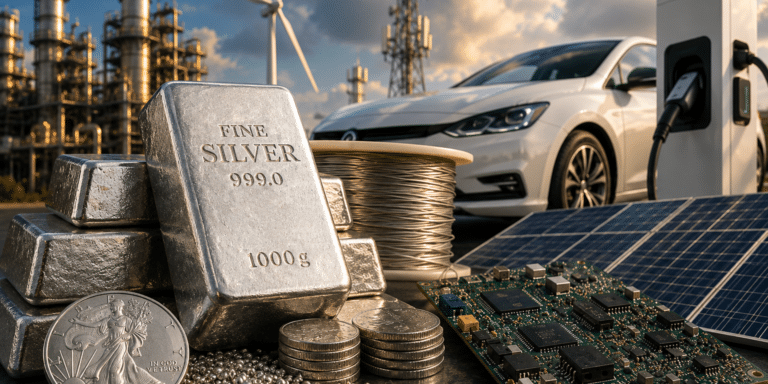
SILVER CRISIS WARNING: Multiple Industries Are Running Out of the Metal It Can't Survive Without

Silver Price Forecast: The Silver Shortage Most Investors Are Missing
For years, I've told readers that gold and silver are essential forms of financial insurance. But today, there's another story unfolding that has nothing to do with inflation, central banks, or monetary policy.
Silver is becoming one of the most strategically important industrial metals on Earth.
And here's the problem: the world wants far more silver than miners are producing.

Most people have no idea this is happening.
While headlines focus on artificial intelligence, electric vehicles, renewable energy mandates, and the race to modernize infrastructure, few stop to ask a critical question:
What materials make all of this possible?
The answer is increasingly silver.
Without silver, much of the modern economy simply doesn't function.
And that's creating a supply-and-demand imbalance that could become one of the biggest investment stories of the decade.
Silver Demand Is Exploding Across Multiple Industries
Unlike gold, which is primarily held as a monetary asset and store of value, silver wears two hats.
It's both a precious metal and an industrial metal.
That distinction matters.
Industrial demand is now becoming one of the most powerful forces driving silver consumption worldwide.
Solar Panels Are Consuming Massive Amounts of Silver
Governments around the world are pouring trillions into renewable energy initiatives.
Solar energy sits at the center of many of those plans.
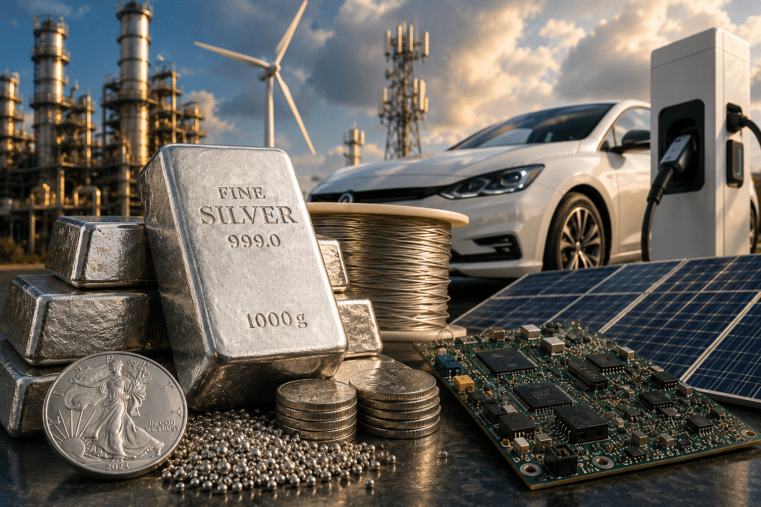
What most people don't realize is that silver is a critical component inside photovoltaic solar cells because of its unmatched electrical conductivity.
Every new solar installation requires silver.
As nations pursue aggressive carbon reduction goals and utility-scale solar projects continue expanding, silver demand from the solar sector keeps rising.
The green energy movement isn't just consuming silver.
It's devouring it.
Electric Vehicles Need More Silver Than Traditional Cars
Electric vehicles represent another major demand driver.
A conventional gasoline-powered vehicle contains relatively modest amounts of silver.
Electric vehicles require significantly more.
Why?
Because silver plays an essential role in:
- Power management systems
- Battery technologies
- Charging infrastructure
- Electrical contacts
- Advanced electronics
As automakers race toward electrification targets, every EV rolling off an assembly line increases industrial silver demand.
The irony is remarkable.
The same policymakers pushing green-energy mandates may unintentionally be creating a resource shortage in one of the metals required to achieve those goals.
AI, Electronics, and 5G Are Adding Even More Pressure
The silver story doesn't stop with solar panels and EVs.
Every major technological trend seems to require more silver.
Consider:
- Data centers supporting artificial intelligence
- Advanced semiconductor manufacturing
- Consumer electronics
- Smartphones
- 5G telecommunications infrastructure
- Industrial automation systems
Silver's conductivity makes it difficult to replace in many applications.
Engineers can reduce usage in some products, but eliminating silver altogether is often impractical or economically inefficient.
That's why industrial demand continues growing even as manufacturers search for alternatives.
Silver Supply Deficit: Why Mine Production Can't Keep Up
This is where the story gets interesting.
Demand is surging.
Supply isn't.
Many silver mines face:
- Rising production costs
- Declining ore grades
- Environmental restrictions
- Permitting delays
- Political instability in mining jurisdictions
Even more important, much of the world's silver production comes as a byproduct of mining for other metals like copper, lead, and zinc.
That means silver production doesn't automatically increase simply because silver demand rises.
The industry cannot flip a switch and suddenly produce millions of additional ounces.
New mines often require years—sometimes decades—to develop.
That's creating what many analysts describe as a structural supply deficit.
In plain English:
The world is consuming more silver than it's comfortably replacing.
Why This Industrial Supercycle Is Different From Traditional Silver Investing
This is the point many investors miss.
Historically, silver ownership was largely driven by monetary concerns.
People bought silver because they feared:
- Inflation
- Currency debasement
- Banking instability
- Financial crises
- Government overreach
Those reasons still matter.
I personally believe they matter more than ever.
But today's industrial demand story is entirely separate.
A solar manufacturer doesn't care about inflation hedging.
An EV company isn't buying silver because it's worried about Federal Reserve policy.
A semiconductor manufacturer isn't stacking silver coins in a vault.
They're buying silver because they need it to build products.
That creates a second source of demand that exists independently from traditional precious metals investors.
And when monetary demand and industrial demand rise simultaneously, supply pressures can intensify dramatically.
Why Wall Street May Be Underestimating the Silver Supply Gap
Markets often focus on what's happening today.
The silver story is about what's developing over the next several years.
Many investors still view silver through an outdated lens.
They see it primarily as a precious metal.
Meanwhile, industrial demand continues expanding quietly in the background.
The result is a growing disconnect between silver's strategic importance and how many investors currently value it.
That's why increasing numbers of analysts are paying closer attention to the long-term implications of the silver supply gap.
For a deeper look at this trend, see Silver Industrial Demand: Solar, EVs, and the Supply Gap.
What This Means for Physical Silver Investors
Physical silver ownership remains one of the simplest ways to gain exposure to the metal.
Many investors appreciate physical silver because it offers:
- Direct ownership
- No counterparty risk
- Tangible wealth preservation
- Protection against financial uncertainty
Now there's an additional factor to consider.
Industrial demand may be creating a separate and potentially powerful tailwind for silver over the long term.
Instead of relying solely on monetary demand, silver could benefit from multiple demand streams simultaneously.
That combination is relatively rare.
Silver Mining Stocks Could Offer Additional Upside
Investors willing to accept higher risk sometimes look beyond physical silver toward mining companies.
Silver miners can potentially benefit from rising silver prices through operational leverage.
When silver prices rise, mining company revenues can increase substantially.
Of course, mining stocks come with additional risks:
- Management execution
- Political exposure
- Cost inflation
- Operational challenges
- Market volatility
They're not a substitute for physical ownership.
But for some investors, they represent another way to participate in silver's industrial growth story.
My Response: This Isn't Just a Silver Story—It's a Global Resource Story
Having spent decades in finance, I've learned that major economic shifts often begin quietly.
Most people don't pay attention until the trend becomes impossible to ignore.
That's what concerns me about silver.
The world is pursuing increasingly ambitious energy and technology goals.
At the same time, the raw materials needed to achieve those goals are becoming harder to secure.
Silver sits right in the middle of that conflict.
Whether you believe in renewable energy or not is beside the point.
Whether you support EV mandates or not is irrelevant.
The reality is that governments, corporations, utilities, manufacturers, and investors all want access to the same finite resource.
That's a recipe for growing competition.
And when demand rises faster than supply for extended periods, markets eventually notice.
The question isn't whether silver remains important.
The question is whether enough people understand just how important it's becoming.
Silver Price Forecast: The Bottom Line for Investors
Silver is no longer just a precious metal story.
It's becoming a critical industrial resource at the center of solar energy, electric vehicles, electronics, AI infrastructure, and next-generation telecommunications.
Demand is accelerating.
Mine supply is struggling to keep pace.
And the resulting structural supply deficit may become one of the defining commodity stories of the coming decade.
For investors focused on protecting purchasing power while also gaining exposure to one of the world's most important industrial metals, silver deserves serious attention.
Join the Dedollarize Inner Circle
If you're concerned about inflation, banking instability, government overreach, and the growing disconnect between economic reality and media narratives, now is the time to get informed.
Join the Dedollarize Inner Circle today for exclusive market analysis, precious metals insights, wealth-protection strategies, and timely alerts designed to help you stay ahead of the financial challenges unfolding around us.
The people who prepare before a crisis have options.
The people who wait for headlines usually don't.
Join the Inner Circle today and stay one step ahead.
Frequently Asked Questions About Silver and Industrial Demand
Why is silver demand increasing so rapidly?
Silver demand is rising because it plays a critical role in solar panels, electric vehicles, artificial intelligence infrastructure, semiconductors, consumer electronics, and 5G telecommunications systems.
How does industrial demand affect the silver price forecast?
When industrial demand grows faster than mine production, supply deficits can develop. Many analysts believe these deficits could support higher silver prices over the long term.
Why is silver important for solar panels?
Silver has the highest electrical conductivity of any metal, making it essential for photovoltaic solar cells that convert sunlight into electricity.