Consumers Are Spending Like Nothing’s Wrong — But the Cracks Beneath the Economy Are Widening Fast

The Illusion of Strength: Spending Is Up, So Everything’s Fine… Right?
On paper, the latest consumer data looks solid.
Spending rose 0.5% in February. Year-over-year, it’s up over 5%. Goods, services, vehicles, healthcare—it all points to an economy that refuses to slow down.
That’s the narrative being pushed:
The consumer is strong. The system is working. Keep moving.

But that’s not the full picture—not even close.
Because while spending is rising, the quality of that spending—and what’s supporting it—is where things start to fall apart.
Income Is Slipping While Spending Climbs
Here’s the part that should stop you cold:
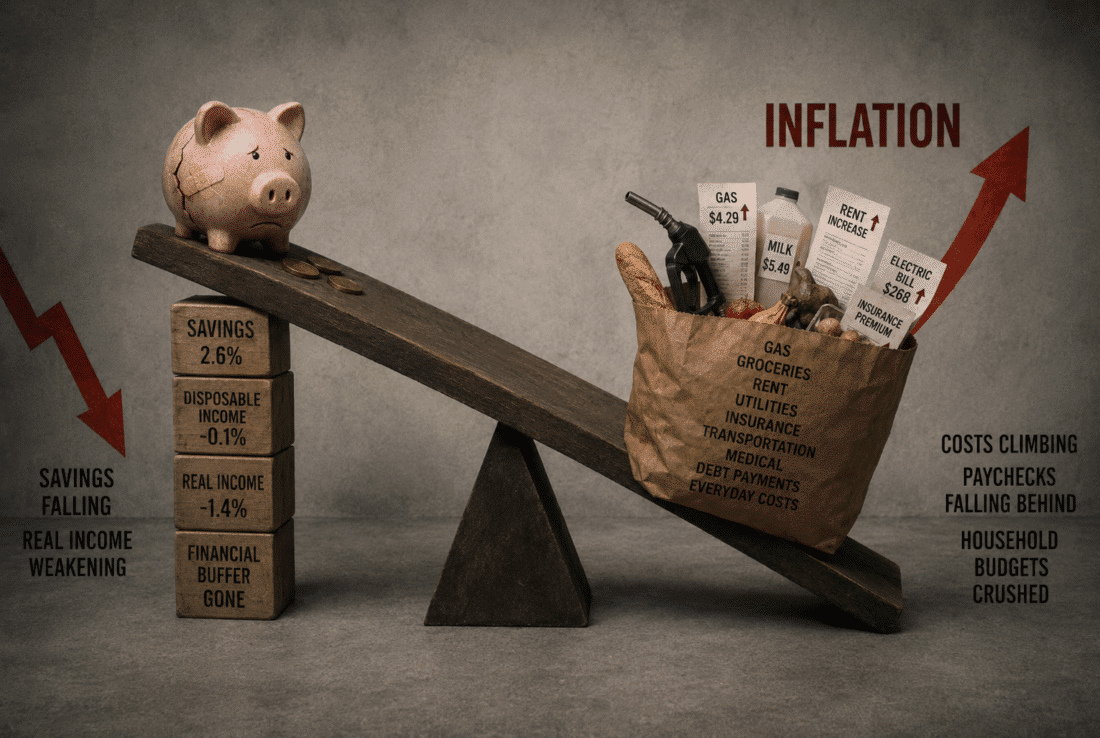
Personal income actually declined.
Not wages—that’s important—but overall income dropped due to falling dividends and reduced government transfers. In other words, some of the financial “padding” people rely on is shrinking.
At the same time, people are spending more.
That gap doesn’t just resolve itself. It gets filled in one of three ways:
- Drawing down savings
- Taking on more debt
- Liquidating assets
None of those are signs of a healthy, self-sustaining economy. They’re signs of strain.
The Savings Rate Is Quietly Collapsing
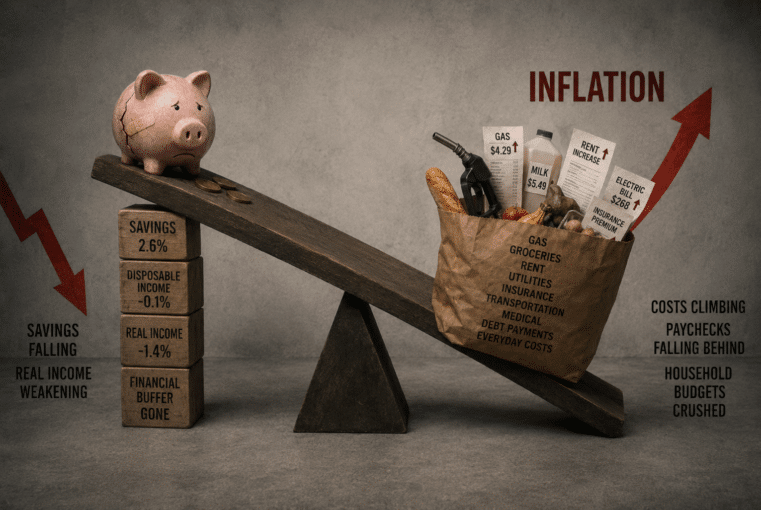
The savings rate dropped from 4.5% to 4.0% in just one month.
That may not sound dramatic—but zoom out, and it tells a different story.
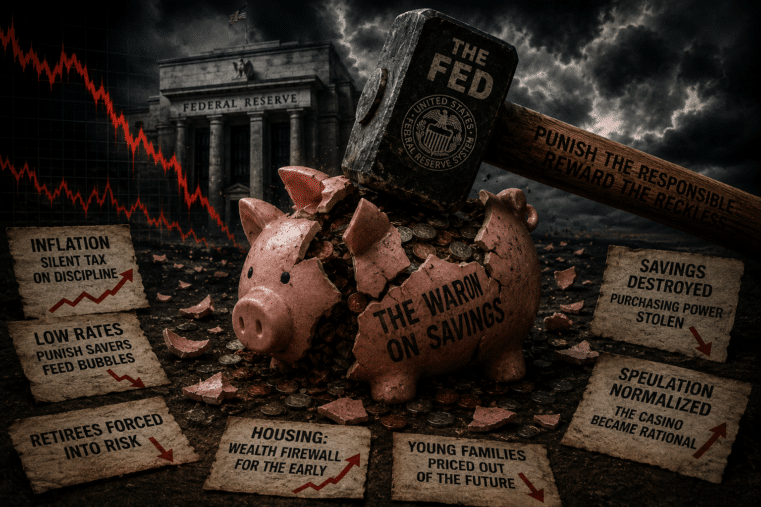
Americans are saving less while continuing to spend at elevated levels. That means the financial buffer that protects households from shocks—job loss, price spikes, emergencies—is eroding.
And once that buffer gets thin enough, the shift from “everything is fine” to “something’s wrong” happens fast.
Inflation Isn’t Going Away—It’s Digging In
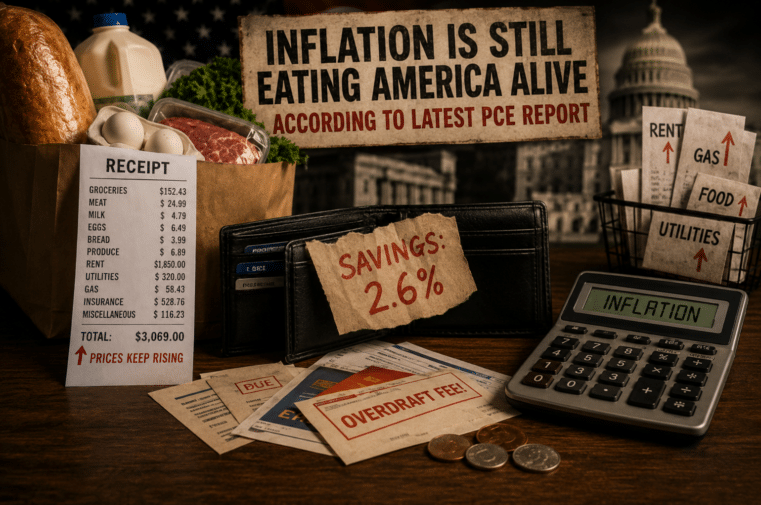
Despite all the talk about cooling prices, inflation is still running hot where it matters.
Core inflation rose 0.4% in a single month. Year-over-year, it’s sitting around 3%.
That’s not “mission accomplished.” That’s persistent pressure.
And here’s the catch most people miss:
As long as consumers keep spending aggressively, businesses have no real incentive to pull prices down. Demand stays high → prices stay elevated → inflation sticks around.
This creates a feedback loop:
- People spend because they expect prices to rise
- Prices rise because people keep spending
That loop doesn’t break gently.
This Isn’t Organic Growth — It’s a Distorted Signal
What we’re seeing doesn’t look like natural economic strength. It looks like a system running on momentum and mixed signals.
On one side:
- Low unemployment
- Rising wages (in nominal terms)
On the other:
- Declining income streams
- Shrinking savings
- Persistent inflation
That combination creates a dangerous illusion:
People feel stable enough to spend—but the foundation underneath them is weakening.
This isn’t sustainable growth. It’s consumption being pulled forward from the future.
The Risk Nobody Wants to Talk About: A Delayed Correction
Here’s the real problem with this kind of environment:
The adjustment doesn’t happen gradually—it happens all at once.
As long as people can keep spending, everything looks stable. But once one of the supports gives way—credit tightens, layoffs rise, or savings run too low—the behavior shifts quickly.
And when it does:
- Spending contracts sharply
- Businesses react fast
- Markets follow
What looked like resilience suddenly reveals itself as overextension.
The Psychology Trap: Acting Normal in an Abnormal System
There’s also a human factor here.
People anchor to normalcy. If they still have a job, still have income, still have access to credit—they behave as if the broader system is stable.
But macroeconomic risk doesn’t announce itself clearly. It builds quietly, beneath the surface, while behavior remains unchanged.
That’s exactly what we’re seeing now:
- Spending patterns that reflect confidence
- Underlying data that suggests fragility
That disconnect is where the real danger lives.
So What Does This Actually Mean?
It means the current strength in consumer spending is not something to blindly celebrate.
It’s a signal—but not the one most headlines are selling.
It tells us:
- Households are under subtle financial pressure
- Inflation is more entrenched than advertised
- The system is relying on continued spending to maintain the appearance of stability
And most importantly:
The longer this continues, the sharper the eventual adjustment is likely to be.
Final Word: Don’t Confuse Motion With Stability
Just because money is moving doesn’t mean the system is healthy.
Right now, consumers are still spending. Markets are still reacting positively. The narrative is still intact.
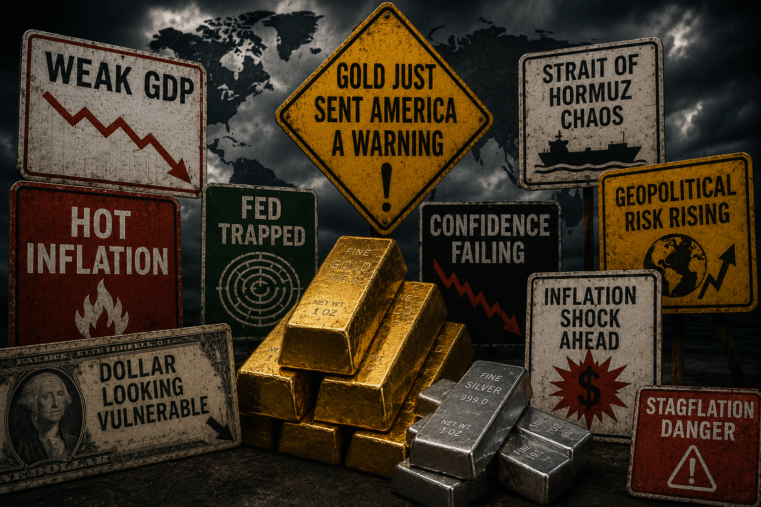
But underneath that, the warning signs are stacking up:
- Income softness
- Savings erosion
- Inflation persistence
That’s not a stable equilibrium. That’s a setup.
Take Action Before the Shift Happens
If you’re paying attention, you already know something isn’t adding up.
This isn’t the time to assume things will smooth themselves out. It’s the time to get informed and get prepared.
The financial system is evolving fast—toward more control, more monitoring, and less individual flexibility. Programs like FedNow and the broader push toward centralized digital currencies are part of that shift.
If you want to understand where this is heading—and how to protect yourself—you need to start now.
Download the Digital Dollar Reset Guide by Bill Brocius
This isn’t optional reading. It’s critical intelligence for anyone who sees the warning signs and refuses to be caught off guard.