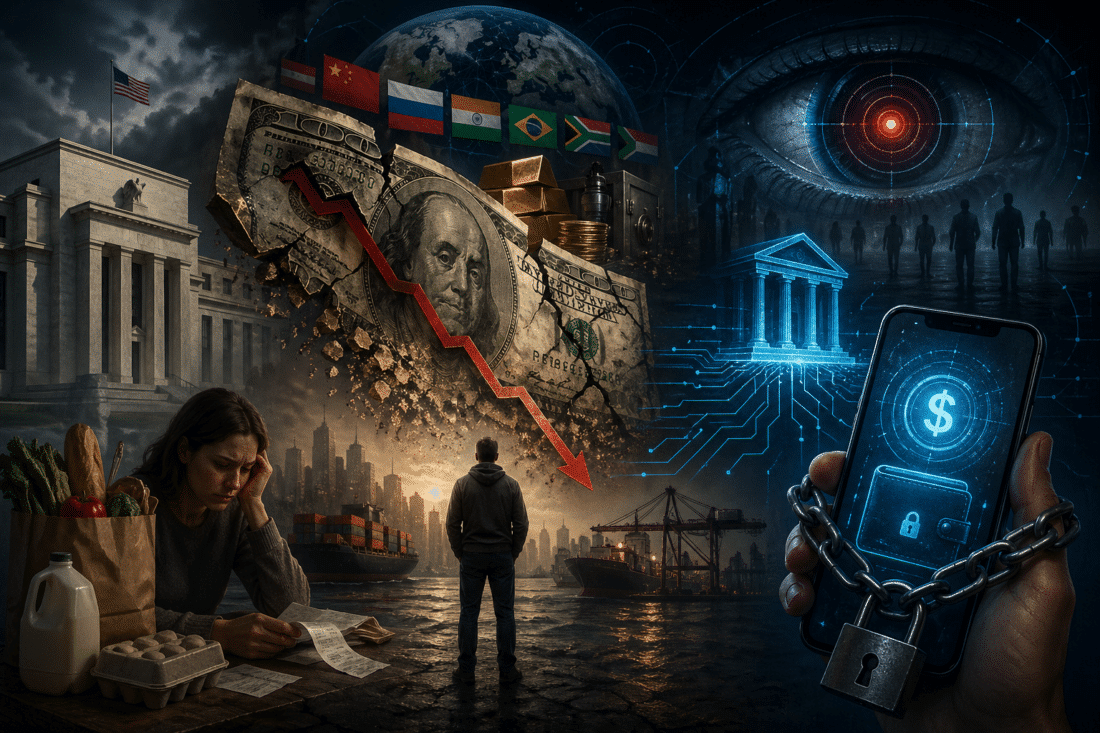

Why Big Banks Aren’t Worried—And Why You Should Be

The Debt-Fueled Mirage Hiding in Plain Sight
Have you ever wondered why the largest banks on the planet never seem too concerned about your economic well-being?
While the headlines herald consumer resilience and “excellent” credit quality, the reality beneath the surface tells a darker story. Banks like JPMorgan Chase, Citigroup, and Wells Fargo have unleashed a chorus of reassuring statements designed to soothe investors and lull the public into complacency. But I’ve spent too many years watching these institutions engineer optimism in the face of mounting systemic fragility to take any of this at face value.
The Anatomy of Manufactured Confidence
Let’s start with the latest earnings parade. Executives pointed to shrinking provisions for loan losses and lower credit card delinquencies as proof that the consumer remains strong. According to them, Americans continue to spend, service their debts, and absorb inflation without flinching.

But here’s what they won’t tell you:
- Card spending increased 7% at JPMorgan, not because wages are rising sustainably, but because more people are relying on credit to maintain the illusion of a stable lifestyle.
- Citi’s branded card revenues jumped 11%, even as their non-accrual loans surged 30%—driven, ironically, by catastrophic events like the California wildfires.
- Banks are reducing loan loss reserves not because risk has vanished, but because their models, anchored in short-term performance, can’t fully account for what happens when this fragile equilibrium finally snaps.
Ask yourself: What happens when inflation continues to erode purchasing power and the consumer can no longer outrun it with credit?
The Myth of Resilient Consumers
Much of the optimism hinges on a six-to-nine-month time horizon—the window banks care about most because it aligns with quarterly reporting cycles and investor expectations. But what if your life doesn’t neatly fit into a corporate earnings quarter? What if the next systemic shock—be it geopolitical upheaval, a banking liquidity crisis, or the rapid adoption of a central bank digital currency—collides with the exhaustion of American households?
Consider this:
- Since 1971, the dollar has lost over 90% of its purchasing power.
- Real wages have stagnated while the cost of essential goods skyrocketed.
- The average American household is now more indebted than at any point in history relative to income.
Yet banks celebrate this dynamic because it means perpetual revenue streams from interest payments. Debt is their product, and your dependence on it is their growth engine.
What Comes Next—And What You Can Do About It
The story the banks won’t tell is that this is unsustainable. Sooner or later, rising rates, policy missteps, or another shock to the system will force a reckoning. When that happens, the same executives praising your “credit health” today will pivot to blaming consumers for “overextending themselves.” It’s a script they’ve rehearsed before, and they’ll recite it again without hesitation.
If you want to escape this cycle of dependence, you must act before the cracks widen into chasms. Here are three actions you can take right now:
- Audit your liabilities. Understand exactly how much of your lifestyle depends on revolving credit and what would happen if rates rise further.
- Shift your reserves. Consider moving a portion of your savings into assets outside the banking system—physical gold, decentralized currencies, or tangible resources.
- Educate yourself. Learn how to operate financially without relying on the goodwill of institutions that see you as little more than a line item in their quarterly reports.
Closing Thoughts
When the headlines say “banks aren’t worried,” remember: that’s precisely when you should be. Their profits rely on your faith in a rigged system. Your independence depends on questioning it.
The financial landscape is shifting faster than most realize, and those who fail to prepare risk being left behind. If you’re ready to take control of your financial destiny, I’ve got two resources that can help you start today:
Download my free book, “Seven Steps to Protect Your Bank Accounts,” and learn actionable strategies to shield your wealth from the coming economic storm. Get your copy here.
Prefer the feel of a hardcover? I’m offering Bill Brocius’ groundbreaking book, The End of Banking as You Know It, at a special price of $19.95 (currently $49.95 on Amazon). Order your copy here.
Remember, in a world where control of money means control of people, taking proactive steps to secure your freedom isn’t optional—it’s essential.