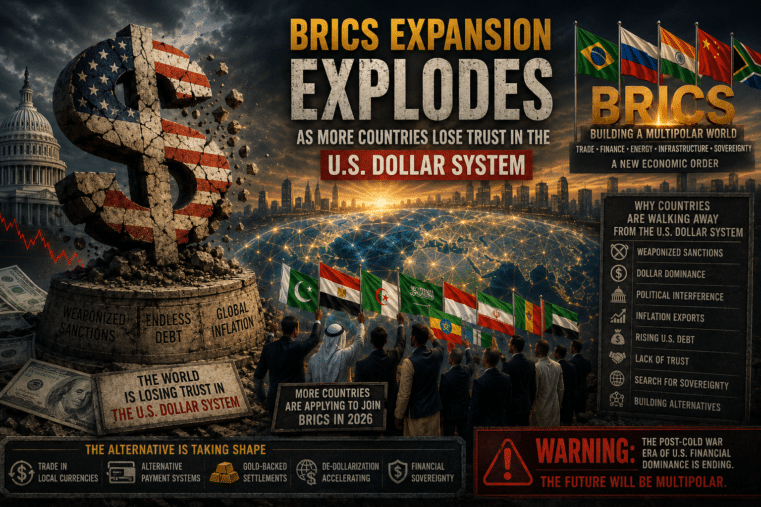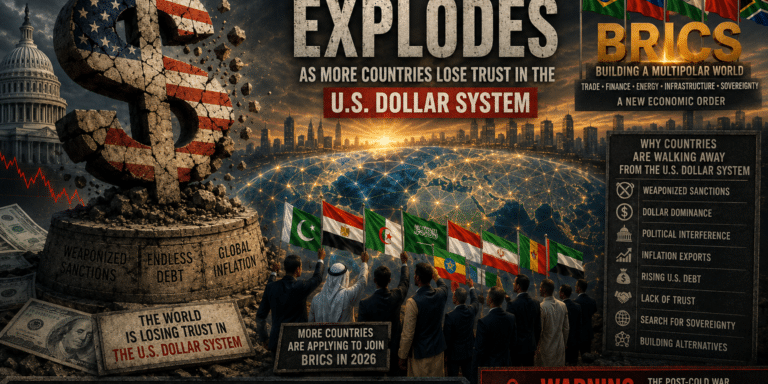
BRICS Expansion Explodes as More Countries Lose Trust in the U.S. Dollar System

The Explosive Growth of BRICS Signals a Global Shift Away From Trust in the United States
The rapid expansion of BRICS is not happening by accident.
Countries are not lining up to join the alliance because of symbolism or diplomatic optics. They are joining because confidence in the United States-led financial order is eroding faster than Western leaders want to admit.
That is the real story.

Russia’s Foreign Minister Sergey Lavrov recently confirmed that the number of countries seeking BRICS membership continues growing in 2026, with many nations aggressively pursuing entry into the bloc despite political pressure from the United States and its allies.
That trend should concern anyone paying attention to the future of global finance.
Because what we are witnessing is not simply the growth of another international organization.
We are witnessing the early stages of a global financial realignment driven by declining trust in the Western economic system itself.
Why Countries Are Losing Faith in the U.S.-Led Financial System
For decades, the United States maintained enormous influence over the global economy through the dollar’s role as the world’s reserve currency.
That system gave Washington tremendous power.
The U.S. could:
- Control access to global banking systems
- Impose sanctions on foreign nations
- Influence international trade flows
- Pressure governments financially
- Export inflation globally through monetary policy
But over time, many nations began viewing that power not as leadership — but as leverage.
And eventually, leverage creates resentment.
The aggressive use of sanctions against Russia after 2022 accelerated this shift dramatically. Many countries watched what happened and came to a dangerous realization:
If Washington can financially isolate one major economy, it can potentially do it to others as well.
That realization fundamentally changed how many governments view dependence on the U.S. dollar system.
BRICS Is Positioning Itself as an Alternative to Western Financial Control
The BRICS alliance — originally formed by Brazil, Russia, India, China, and South Africa — is increasingly marketing itself as an alternative to Western-dominated financial institutions.
That message resonates strongly with developing economies.
Why?
Because many countries feel trapped inside a global financial system where:
- The U.S. dollar dominates trade
- Western central banks influence liquidity
- Sanctions can cripple economies
- IMF and World Bank policies often come with political strings attached
- American monetary policy creates inflation shocks abroad
BRICS offers something many governments find attractive:
A multipolar financial structure less dependent on Washington.
That does not mean BRICS nations are perfectly aligned internally. They are not.
But they share one important objective:
Reducing dependence on U.S. financial dominance.
De-Dollarization Is No Longer a Fringe Discussion
For years, discussions about de-dollarization were dismissed as unrealistic.
Not anymore.
Countries across Asia, Africa, the Middle East, and Latin America are increasingly exploring:
- Bilateral trade in local currencies
- Alternative payment systems
- Gold-backed settlement mechanisms
- Yuan-denominated energy trade
- Diversification away from dollar reserves
The numbers are becoming difficult to ignore.
Yuan settlement activity continues expanding rapidly. Central banks are increasing gold purchases. Energy exporters are experimenting with non-dollar transactions.
This is not happening because governments suddenly dislike America culturally.
It is happening because they no longer fully trust the long-term stability and neutrality of the U.S.-led financial architecture.
That distinction matters.
Sanctions May Have Accelerated the Collapse of Dollar Trust
One of the biggest strategic miscalculations by Western policymakers may have been overusing financial sanctions.
Sanctions can be effective in the short term.
But when weaponized repeatedly, they encourage countries to build alternatives.
That appears to be exactly what is happening now.
Many governments increasingly fear becoming vulnerable to:
- Asset freezes
- Banking restrictions
- Dollar payment disruptions
- SWIFT exclusion
- Secondary sanctions
- Trade limitations tied to geopolitical disagreements
As a result, countries are looking for systems that reduce their exposure to Washington’s influence.
BRICS has become the natural rallying point for many of those efforts.
The Multipolar World Order Is No Longer Theoretical
Lavrov’s comments about BRICS representing a “prototype” for a multipolar world are important because they reflect a broader global shift already underway.
The post-Cold War era of nearly uncontested American financial dominance is facing growing resistance.
China is expanding its economic influence aggressively.
Russia is deepening energy and commodity partnerships outside the Western sphere.
Middle Eastern nations are balancing relations between East and West.
Developing countries increasingly want flexibility rather than dependence on a single power structure.
This does not mean the dollar disappears tomorrow.
But it does mean the world is becoming more fragmented financially, politically, and economically.
And fragmentation creates instability.
Why This Matters to Ordinary Americans
Many Americans assume global reserve currency discussions have little impact on daily life.
That assumption is dangerously shortsighted.
Dollar dominance gave the United States enormous economic advantages for decades.
It allowed Washington to:
- Borrow cheaply
- Run massive deficits
- Export inflation internationally
- Maintain strong demand for Treasury debt
- Sustain elevated living standards despite rising debt
But if global demand for dollars gradually weakens over time, the consequences could become severe.
Potential risks include:
- Higher inflation
- Rising borrowing costs
- Weaker Treasury demand
- Increased financial volatility
- Declining purchasing power
- Greater pressure on U.S. debt markets
The global financial system depends heavily on continued confidence in U.S. economic stability.
BRICS expansion suggests that confidence may be eroding at the margins.
Rising Debt and Monetary Expansion Are Fueling Global Distrust
The timing of BRICS growth is not accidental.
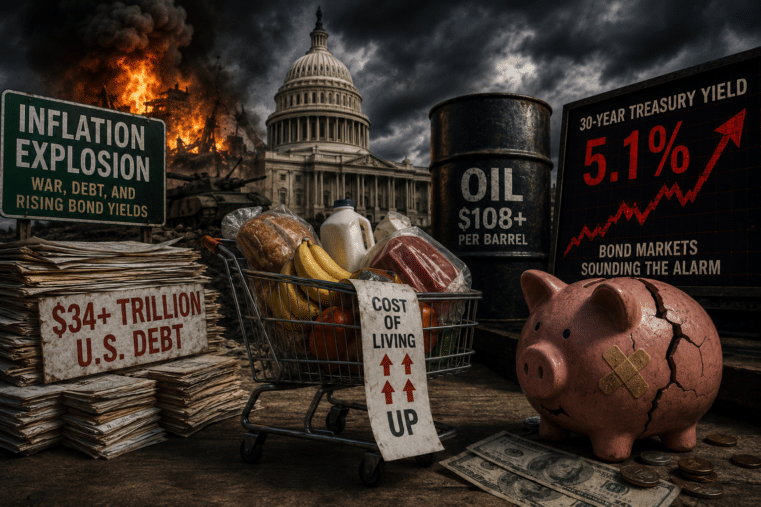
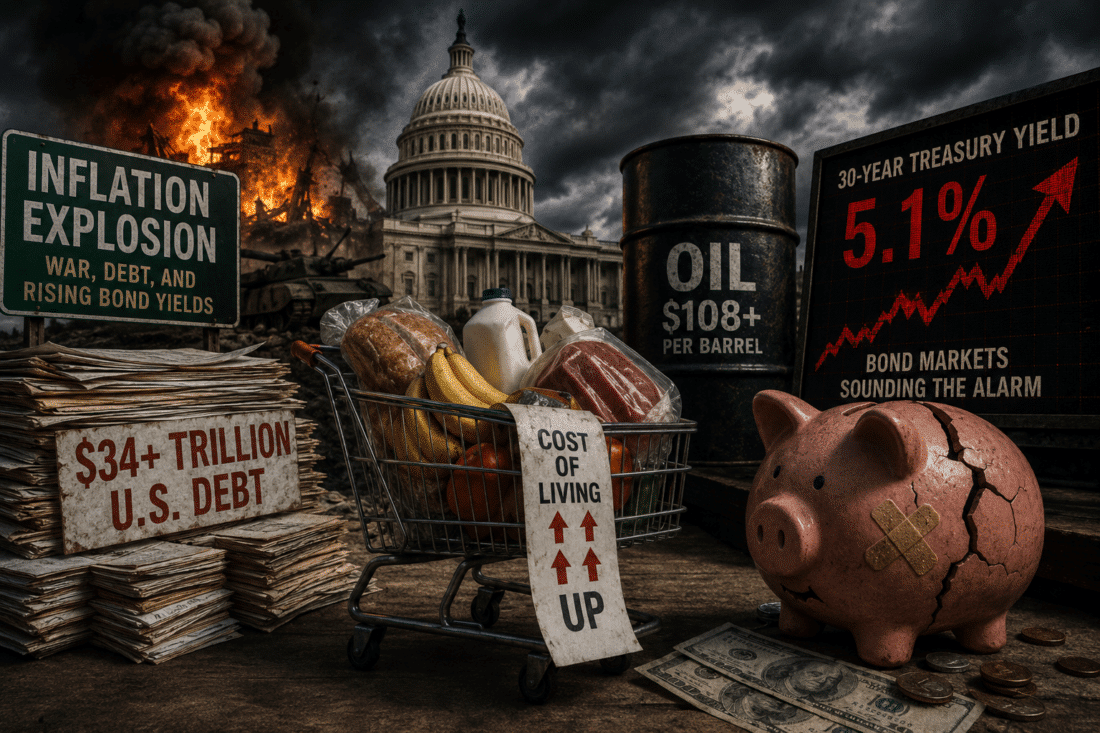
The United States is currently facing:
- Massive national debt
- Persistent budget deficits
- Rising interest costs
- Inflationary pressure
- Banking system fragility
- Political polarization
- Expanding monetary intervention
Foreign governments see these problems too.
And many are beginning to question whether the long-term trajectory of the dollar system remains sustainable.
When confidence weakens in heavily debt-based systems, countries naturally seek diversification.
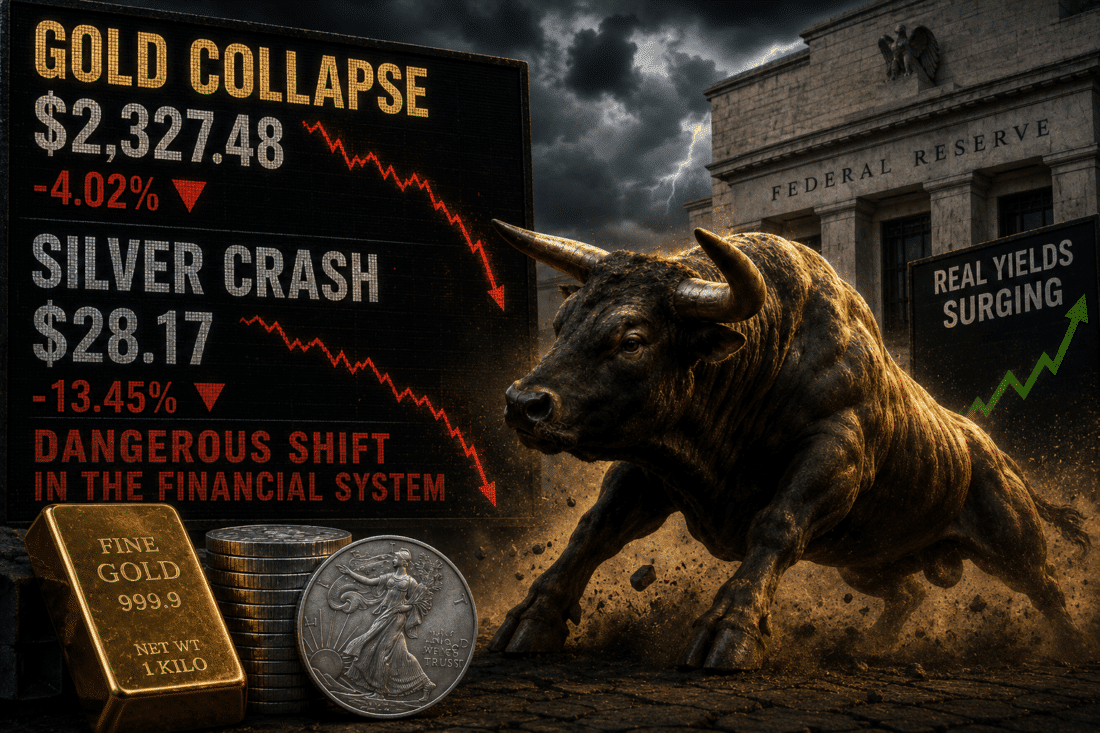
That is one reason gold accumulation by central banks has accelerated alongside BRICS expansion.
Nations are hedging against future monetary instability.
The West May Be Underestimating the Speed of Global Realignment
One of the biggest mistakes Western policymakers continue making is assuming dollar dominance is permanent.
History suggests otherwise.
Reserve currency systems eventually shift when:
- Debt levels become excessive
- Confidence deteriorates
- Financial systems become weaponized
- Rivals create viable alternatives
- Economic fragmentation accelerates
None of this guarantees immediate collapse.
But structural shifts often happen slowly — and then suddenly.
The rapid growth in BRICS interest suggests the world may already be moving deeper into that transition phase.
Why Financial Markets Could Eventually Feel the Impact
The long-term implications of this trend extend far beyond geopolitics.
If de-dollarization efforts continue expanding:
- Treasury markets could face reduced foreign demand
- Bond yields could rise structurally over time
- Inflation management could become more difficult
- Currency volatility could increase
- Global trade patterns could shift dramatically
These pressures would directly impact:
- Mortgage rates
- Consumer prices
- Retirement accounts
- Stock market stability
- Government borrowing costs
Most Americans still assume the financial system operating today will function indefinitely the same way it always has.
But global monetary systems evolve.
And history shows reserve currency transitions are rarely smooth.
Final Thoughts: BRICS Expansion Reflects a Growing Crisis of Confidence in the West
The real significance of BRICS expansion is not simply about Russia, China, or geopolitics.
It is about trust.
More countries are exploring alternatives because confidence in the U.S.-led financial system is weakening beneath the surface.
Sanctions accelerated that trend.
Debt expansion accelerated it further.
Inflation, monetary intervention, and rising geopolitical instability are now deepening it even more.
The world is gradually moving toward a more fragmented financial order where American dominance is increasingly questioned rather than automatically accepted.
That transition could take years.
But the momentum is becoming harder to ignore.
And if confidence in the dollar system weakens substantially over time, the economic consequences for the United States could eventually become profound.
The rise of BRICS is not simply a story about emerging markets.
It is a warning sign that the global financial system may be entering a period of historic transformation.
Prepare Before the Financial System Changes Faster Than Most People Expect
As global trust in the dollar system weakens and nations increasingly search for alternatives to Western-controlled finance, governments and central banks are rapidly expanding new digital financial infrastructure designed to increase oversight, monitoring, and centralized control.
If you want to understand how systems like FedNow, digital currencies, programmable money, and financial surveillance networks could reshape financial freedom during future monetary instability, you need to read The Digital Dollar Reset Guide by Bill Brocius.
Inside the guide, you’ll learn:
- Why de-dollarization matters to ordinary Americans
- How financial crises often accelerate centralized control systems
- The risks tied to programmable money and transaction monitoring
- How governments may respond to future monetary instability
- Practical strategies to strengthen your financial preparedness