
“Digital Gold” Is Booming—But It Could Leave You Exposed When It Matters Most

The Rise of Tokenized Gold—And Why It Sounds So Appealing
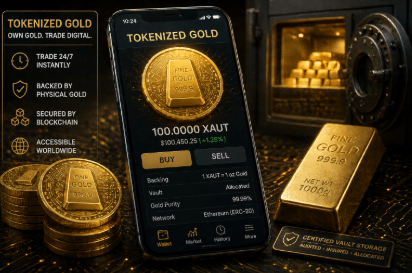
Lately, there’s been a lot of buzz around “tokenized gold.”
On paper, it sounds great…
- Gold you can trade instantly
- Stored somewhere “secure”
- Backed by blockchain technology
Heck, some folks are saying it’s the future of investing.
And I get the appeal. In a world that’s gone digital, the idea of owning gold with a few clicks feels convenient.
But let me tell you something I’ve learned the hard way over decades in this business:
Convenience and security are not the same thing.
Gold Prices Today vs. What You Actually Own
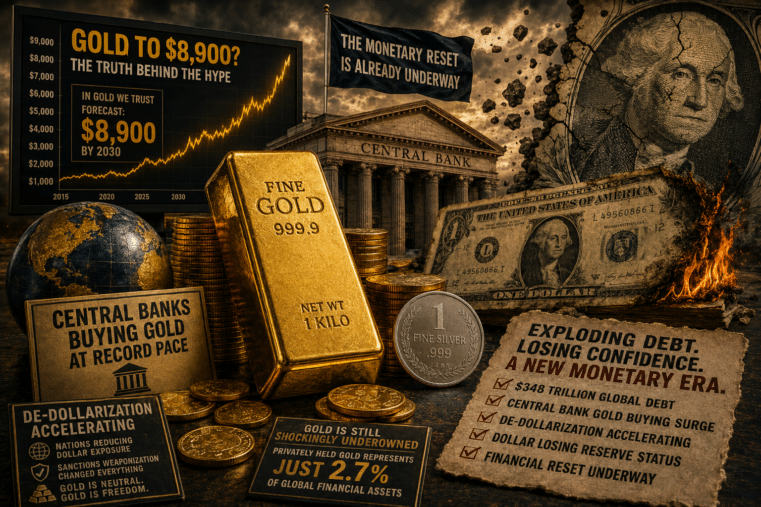
You can check gold prices today on your phone in seconds. The number is right there.
But here’s the question nobody’s asking:
Do you actually own gold—or do you own a promise?
Because that’s what most tokenized gold really is…
A promise that somewhere, somehow, someone is holding gold on your behalf.
And that’s where things start to get shaky.
Even the Industry Admits There Are Problems
Now, here’s what caught my attention in the latest discussion around tokenized gold…
Even the people building these systems admit:
- The market is fragmented
- Custody models vary widely
- Legal frameworks are inconsistent
- Redemption rules aren’t standardized
In plain English?
Every token is different—and you have to trust the issuer.
That’s not a small detail. That’s the whole ballgame.
Because if you need to redeem that gold in a crisis, the fine print suddenly matters a whole lot more than the technology.
“Fixing the Plumbing” Still Doesn’t Fix the Risk
The World Gold Council is now trying to “standardize” tokenized gold—basically building a shared system to make everything more uniform.
They call it improving infrastructure.
I call it this:
Trying to make a complicated system slightly less complicated.
But here’s the problem…
Even if they standardize everything, you’re still dealing with:
- Third-party custodians
- Digital platforms
- Regulatory oversight
- Counterparty risk
That’s a lot of moving parts between you and your wealth.
And when systems get stressed—financially or politically—those moving parts are exactly what break.
Physical Gold and Silver: No Middleman, No Permission
Now let’s compare that to physical gold and silver.
When you hold it in your hand, there’s no:
- Counterparty
- Server outage
- Redemption delay
- Policy change
It’s yours. Period.
I like to explain it like this…
Tokenized gold is like having a claim ticket to a car.
Physical gold is having the keys in your pocket.
Which one do you trust when things go sideways?
What Happens in a Real Crisis?
This is where the rubber meets the road.
Let’s say we hit a serious financial event:
- Banks freeze withdrawals
- Markets shut down
- Digital systems go offline
- Governments tighten controls
Now ask yourself…
What happens to your tokenized gold?
Can you access it instantly?
Can you redeem it without friction?
Can you bypass restrictions?
Or are you stuck waiting for a system to function properly?
Because history tells us one thing loud and clear:
In a crisis, access matters more than valuation.
Institutions May Play the Game—But You Don’t Have To
Look, big institutions are experimenting with tokenized gold. That’s true.
They’ve got teams of lawyers, risk managers, and backdoor access most everyday folks don’t.
But you?
You don’t need complexity. You need certainty.
You need something that doesn’t depend on:
- A platform staying online
- A company staying solvent
- A regulator approving your transaction
That’s why, after all these years, I still come back to the same conclusion:
Physical gold and silver are the foundation—not the experiment.
My Take—Don’t Trade Security for Convenience
I understand the temptation. The world is going digital, and nobody wants to feel left behind.
But not everything that’s new is better.
And when it comes to protecting your wealth?
Simple beats sophisticated every single time.
Because when the system gets shaky—and it will—you don’t want layers of technology between you and your money.
You want something real. Tangible. Proven.
The Bottom Line
Tokenized gold might grow. It might even become more standardized over time.
But growth doesn’t equal safety.
And innovation doesn’t eliminate risk.
Meanwhile, the reasons to own physical gold and silver haven’t changed:
- Protection against currency devaluation
- Independence from financial systems
- Stability during global uncertainty
That’s not hype. That’s history.
Join the Inner Circle and Protect What You’ve Earned
If you want to cut through the noise and focus on what actually works, I invite you to join our Inner Circle.
We break things down in plain English—no gimmicks, no tech jargon—just real strategies to help you protect your wealth in an uncertain world.
Because when things get complicated out there…
You’ll be glad you kept your strategy simple.